
We talk a lot about hybrids, EVs, charging networks and futuristic dashboards… but not nearly enough about one of the most polluting parts of everyday driving: tire wear. Yes, your tires are literally shedding tiny particles every time you drive, and all that dust ends up somewhere: in the air, on the road, in storm drains, in waterways. Fun, right?
Well, Continental has decided to tackle the problem head‑on. A massive study by ADAC (a german automotive club) of 160 different tire models found that Continental products wear 11% less than the market average. Not bad for a company most people associate mainly with braking tests and sporty handling.
A Science‑Lab Fever Dream
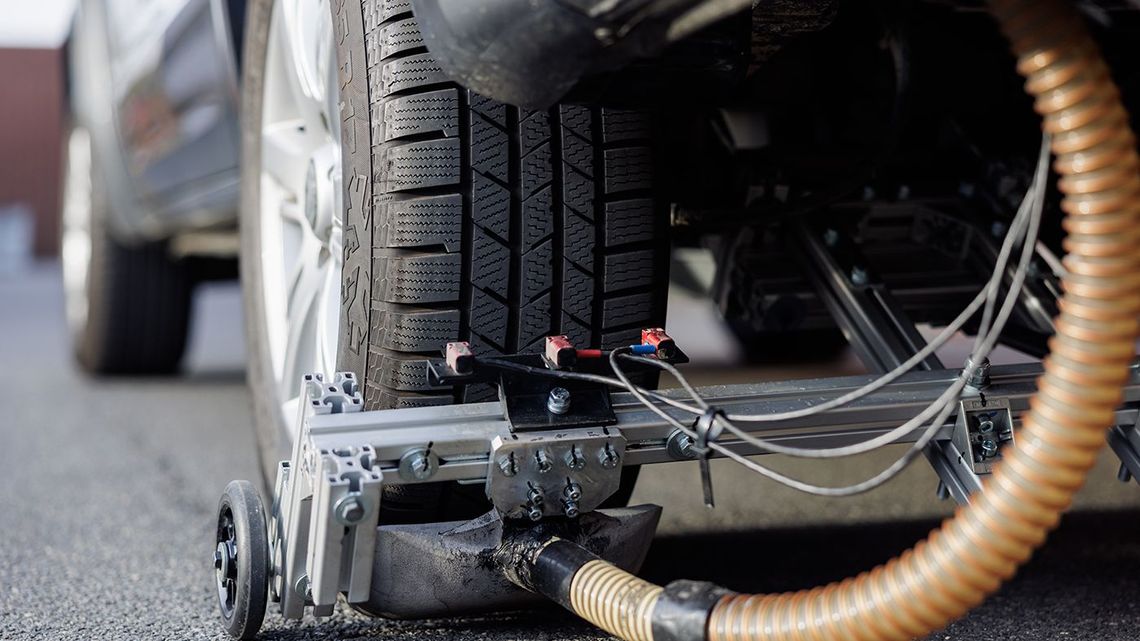
To push the research further, Continental teamed up with the Technical University of Braunschweig. Together, they launched a project with the extremely glamorous name OLRAP. The idea? Mount a high‑tech vacuum and a set of advanced sensors behind a test vehicle’s wheels to literally suck in and analyze the particles being shaved off the tires.
Continental then uses all that data, from particle quantity to size and structure, to refine its rubber compounds and tread patterns. And the timing couldn’t be better: Euro 7 regulations will start limiting tire‑wear emissions in 2028. In other words, now’s the time to get ready!
Real‑World Testing
Engineers discovered something simple but incredibly important: the harder you accelerate, brake, or corner, the more your tires shed material. That's not very shocking, but now they can measure the effect precisely. With this information, scientists also learned how temperature, humidity, and road‑surface type change the amount of particles released. This kind of insight is gold for designing tomorrow’s tires, and for related tech too. Just look at the RAU project, which created a storm‑drain filter that captures 97% of tire particles during heavy rain. Or Continental’s own EcoContact 6, which produces 30% less wear and delivers 20% more mileage than its predecessor.
So, what does this mean? Well, we’ll never eliminate tire wear completely. After all, friction is literally the point, but Continental is proving there’s room for major improvements. Less particulate matter in the air, less micro‑pollution in cities, and longer‑lasting tires without compromising safety. It may not sound as cool as a futuristic electric super‑SUV, but if we’re serious about cleaner mobility, this is exactly the kind of innovation that gets us there.