
Anyone who knows me knows I’ve always had a soft spot for history. That is probably why I wanted to talk about tires from a different angle today, not just in terms of grip, comfort, or efficiency. For most of human history, getting around was above all a matter of utility. Long before modern compounds and sophisticated tire construction, vehicles rolled on rigid, noisy wheels that were far less forgiving than anything we know today.
First, a quick word about the term itself. In English, you probably know the word tire or tyre, but the term is older than the modern pneumatic tire and originally referred to the outer band of a wheel. In French, the everyday word pneu comes from pneumatique, a word directly tied to air. That contrast says a lot on its own: over time, the wheel stopped being something that was simply reinforced from the outside and became something designed to cushion the road itself.
Before the tire: strong wheels, rough rides
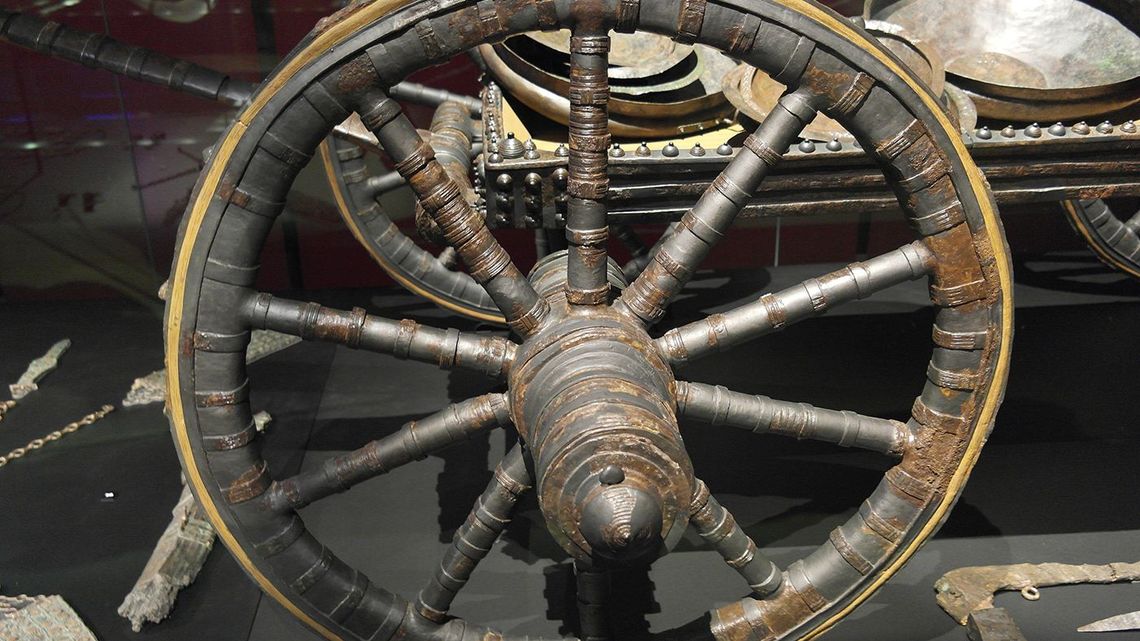
The earliest known wheels, dating back to prehistory, were made of solid wood. By antiquity, however, they had evolved into more familiar forms, with spokes and a rim made from several pieces. To make them more durable, wheelmakers fitted an iron band around the outside. This band was heated to expand it, placed around the wooden wheel, and then left to cool. As it contracted, it held the whole structure tightly together. That was the original tire.
The system was durable, but comfort was another story. On roads that were often uneven, muddy, or poorly maintained, a wooden wheel reinforced with iron transmitted shocks, vibrations, and especially noise directly into the vehicle. The wheel could survive the journey, but the passengers had to survive it too. Before the modern tire, travel was not smooth. It was something you endured.
From solid rubber to air-filled comfort
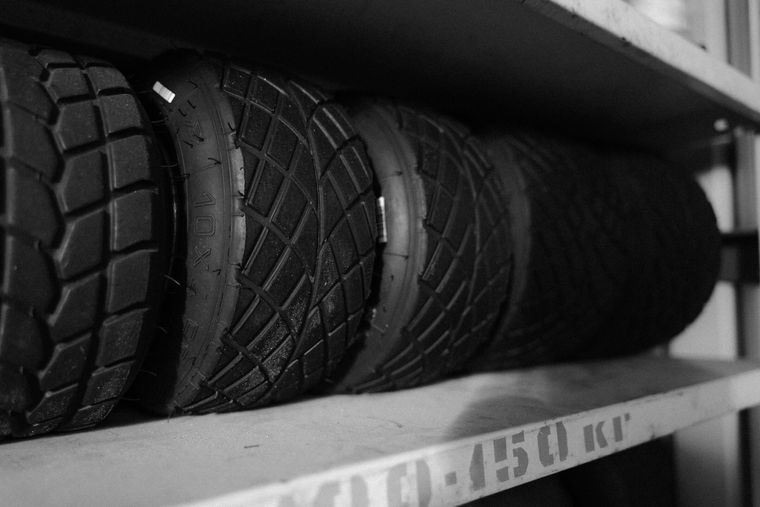
It was in the nineteenth century that rubber began to change the story. Before the pneumatic tire as we know it, some vehicles were fitted with solid rubber tires. These already offered an improvement over bare iron: they reduced part of the noise and softened some of the harshness of the ride. Still, they remained far less forgiving than an air-filled tire.
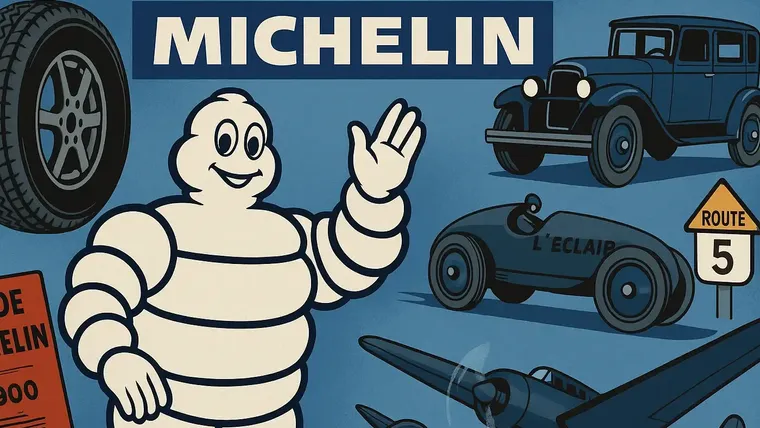
The real turning point came with the pneumatic tire. Robert William Thomson had proposed an early version as far back as 1845, but it was too expensive to spread widely. It was only from 1888 onward, with John Boyd Dunlop, that the air-filled tire became a practical solution, first in the world of bicycles. Soon after, Michelin helped adapt the technology to the automobile through the detachable tire.
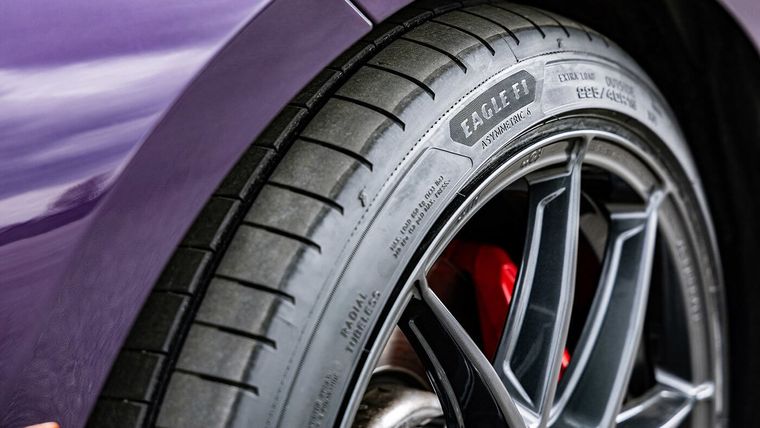
From that point on, the tire no longer existed only to protect the wheel. It became an essential part of comfort itself, absorbing imperfections in the road while helping the vehicle maintain grip and stability. It may seem ordinary today, but the modern tire quietly transformed travel into something far smoother, quieter, and more humane.
Photo: Christian Gebhardt, Wikimedia