
Choosing the right tire size is one of the most important decisions for your vehicle’s safety, performance, comfort, and overall driving experience. Whether you are considering a different size for better traction, improved appearance, winter driving, or cost savings, it is essential to understand what is possible and what is recommended.
Complete Guide to Choosing the Right Tire Size for Your Vehicle
This guide explains how tire sizing works, why drivers change sizes, and the advantages and disadvantages of going larger, smaller, wider, or narrower. It also covers wheel compatibility, staggered setups, seasonality, economy, traction, aesthetics, and safe sizing rules.
Can I Use a Different Tire Size Than Recommended?
Yes, sometimes you can use a different tire size than the one recommended for your car, but you need to be careful. The tire size listed on the driver-door placard or in the owner’s manual is the safe baseline. It includes the recommended size, cold tire pressure, load capacity, and sometimes the speed rating.
A different tire size may be acceptable only if the load index, speed rating, rolling diameter, rim fitment, clearance, and drivetrain compatibility are all suitable for your exact vehicle.
Original Tire Size Recommended by the Manufacturer

Every vehicle comes with an original tire size specified by the manufacturer. This size is carefully selected to balance safety, comfort, fuel efficiency, handling, braking, and clearance.
You can usually find your original tire size:
- In the owner’s manual
- On the sticker inside the driver’s door
- On the current tires
Staying close to the original size helps ensure accurate speedometer readings, proper wheel-well clearance, and optimal braking and handling performance. Changing from the original size is possible, but it should always be done within acceptable limits.
How to Check Tire Size on Your Current Tires

One of the easiest and most reliable ways to find your tire size is by reading the markings directly on the sidewall of your current tires. Every tire sold for road use includes a standardized size code that provides key information about its dimensions and specifications.
Where to Look
The tire size is printed on the sidewall, which is the outer surface of the tire facing outward. You will usually see a sequence of numbers and letters similar to 225/45 R17 91V.
What Each Tire Size Number Means
- Tire width: The width of the tire in millimetres, measured from sidewall to sidewall.
- Aspect ratio: The sidewall height expressed as a percentage of the tire width.
- Construction type: “R” means radial construction, which is standard for modern vehicles.
- Rim diameter: The wheel size the tire fits, measured in inches.
- Load index: The amount of weight the tire can safely carry.
- Speed rating: The maximum speed the tire is designed to handle safely under proper conditions.
Additional Tire Markings to Know
- M+S or 3PMSF: Indicates winter or all-season capability.
- DOT code: Includes manufacturing details and production date.
- Rotation arrows: Show the correct direction for installation.
- XL or Reinforced: Indicates a higher load capacity tire.
Important Tips When Checking Your Tires
- Check all four tires, especially if a previous owner may have changed sizes.
- Make sure the size matches what is recommended by the manufacturer.
- If you plan to change size, use a comparison tool such as TireSize.com’s comparison tool.
- Ensure the tire size fits your current wheels, or consider upgrading your wheels through Blackcircles.ca wheels.
Why Change Tire Size? Downsizing and Upsizing Explained

Drivers choose different tire sizes for several reasons, including seasonal adaptation, cost savings, improved traction, better handling, aesthetic upgrades, or availability when the original size is harder to find.
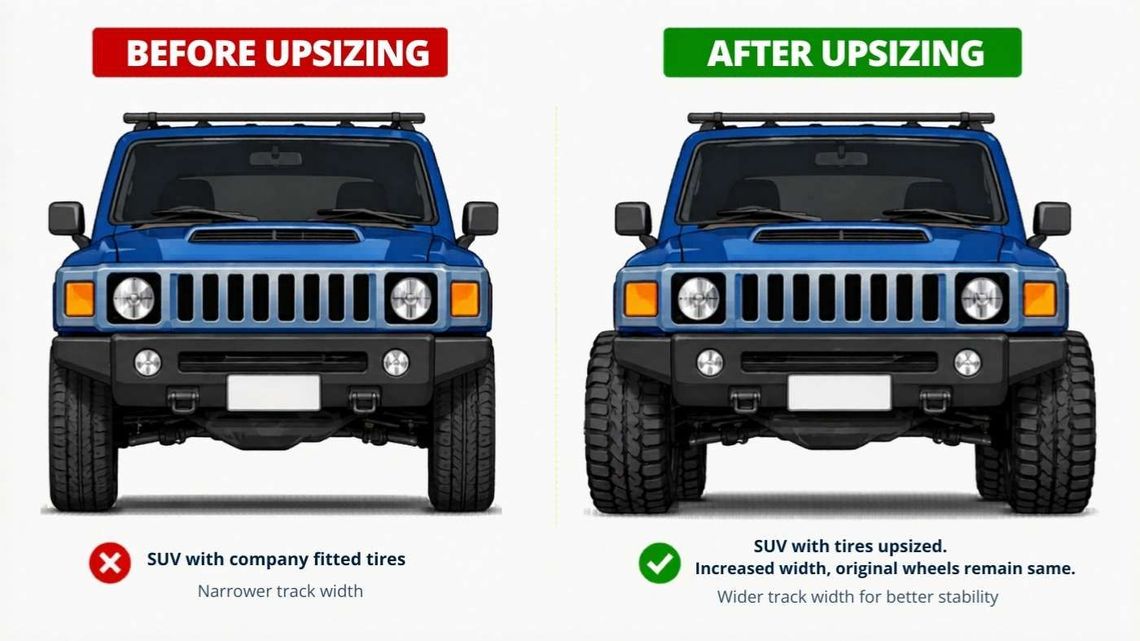
When upgrading your wheels and tires, it is common to come across terms like downsizing and upsizing. Downsizing means choosing a smaller wheel or tire setup than your original equipment, often to improve comfort, reduce costs, and enhance winter performance. Upsizing means choosing a larger setup for a sportier look, sharper handling, and stronger road presence.
Upsizing is especially popular with pickup owners, where larger wheels and tires are sometimes used to achieve a more aggressive stance and improved off-road capability. However, larger wheels can affect fuel efficiency and ride comfort, making it important to understand the trade-offs before making a decision.
Visual Guide: Tire Size Trade-Offs
The chart below gives a simplified comparison of common tire size changes. Higher bars indicate stronger benefits for that factor.
Advantages and Disadvantages of Larger Tires: Upsizing
Larger tires typically mean a greater overall diameter. They can be appealing for looks, ground clearance, and stability, but they must remain within safe tolerances.
Benefits of Larger Tires
- Improved ground clearance
- More stable highway driving
- Enhanced visual presence
- Sportier or more aggressive appearance
Drawbacks of Larger Tires
- Reduced acceleration due to increased weight
- Potential speedometer inaccuracy
- Higher cost
- Possible rubbing if clearance is insufficient
- Possible reduction in ride comfort and fuel efficiency
Advantages and Disadvantages of Smaller Tires: Downsizing
Smaller tires reduce the overall diameter or are often paired with smaller wheels. Downsizing is common for winter tire setups because it can reduce costs and improve performance in snowy conditions when done correctly.
Benefits of Smaller Tires
- Lower cost
- Better acceleration due to lighter weight
- Ideal for many winter setups
- Often paired with smaller rims and taller sidewalls
Drawbacks of Smaller Tires
- Reduced ground clearance
- Less stability at high speeds
- May affect braking performance
- Must still match load rating, diameter, wheel fitment, and clearance
Advantages and Disadvantages of Wider Tires
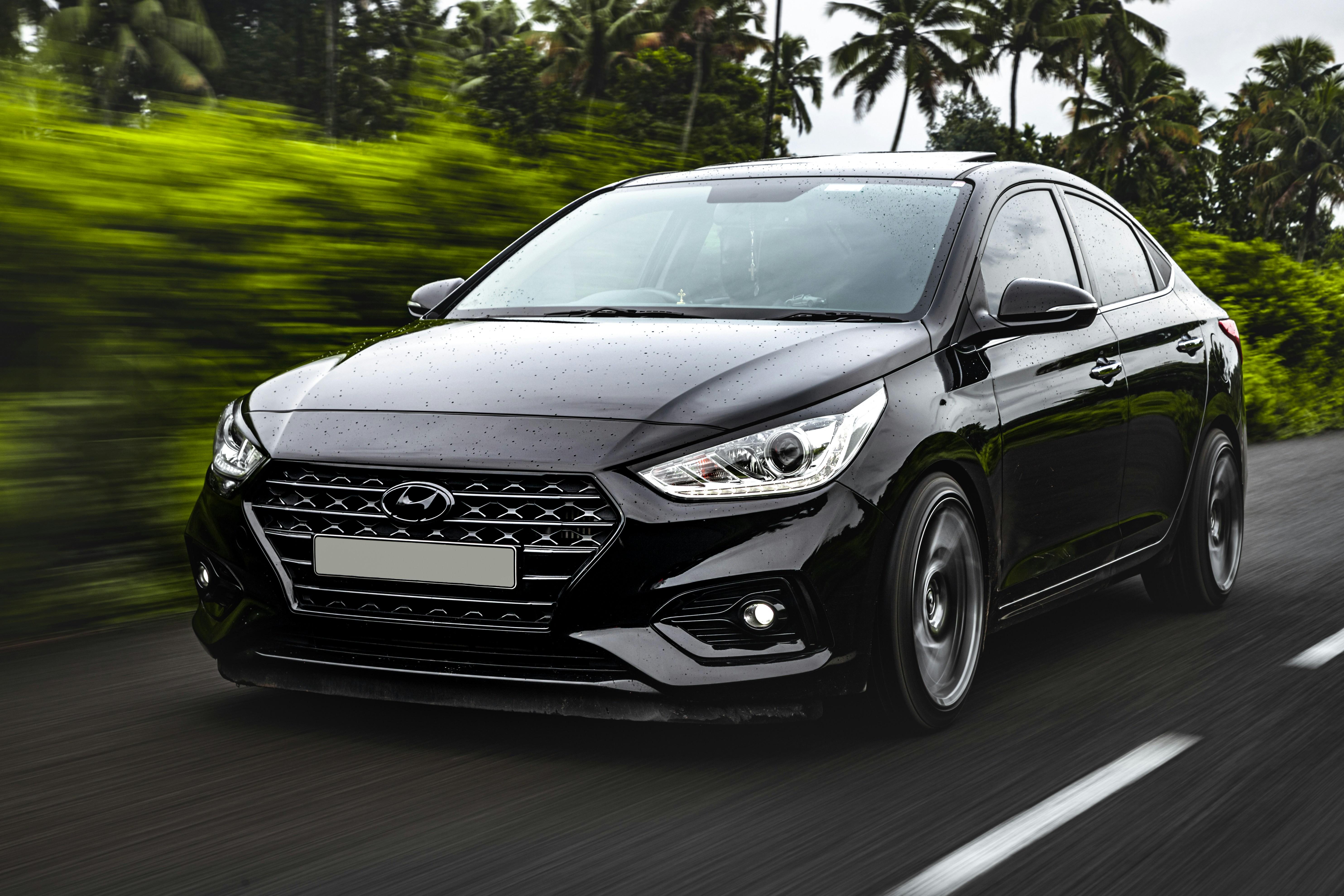
Wider tires increase the contact patch with the road. They are often chosen for performance and aesthetics, but they are not always ideal for every season.
Benefits of Wider Tires
- Better dry traction
- Improved cornering stability
- Sportier appearance
Drawbacks of Wider Tires
- Increased fuel consumption
- Higher cost
- Reduced performance in snow or slush
- Greater risk of hydroplaning in wet conditions
Advantages and Disadvantages of Narrower Tires

Narrower tires reduce the contact surface. They are commonly recommended for winter use because they can cut through snow more effectively than wider tires.
Benefits of Narrower Tires
- Better traction in snow and winter conditions
- Lower cost
- Improved fuel efficiency
Drawbacks of Narrower Tires
- Less grip on dry roads
- Reduced cornering performance
- Less aggressive appearance
Different Tire Sizes Front and Rear
Some vehicles use different tire sizes on the front and rear, known as a staggered setup. This is common on certain performance vehicles, especially rear-wheel-drive models.
Benefits of a Staggered Tire Setup
- Enhanced handling and grip for performance vehicles
- Improved traction for rear-wheel-drive cars
Drawbacks of a Staggered Tire Setup
- Tires cannot be rotated front to back
- Replacement costs can be higher
- Compatibility is more limited when changing sizes
If your vehicle is not designed for staggered sizing, it is usually best to avoid it.
Changing Tire Size vs. Wheel Compatibility
Tire size changes must always be compatible with your wheels. Each wheel has a specific width and diameter that supports a range of tire sizes.
Key Wheel Compatibility Considerations
- Tire width must match the wheel width.
- Tire diameter must match the rim diameter.
- Overall diameter should stay close to the original size.
- The tire should not rub the fenders, suspension, brake lines, or wheel well at full steering lock or over bumps.
If you are upgrading your wheels, explore compatible options here: Blackcircles.ca wheels.
Tool: Tire Size Comparison Calculator
Compare two tire sizes by entering the width, aspect ratio, and rim diameter for each size. The tool calculates diameter, width, sidewall height, circumference, revolutions per mile, and the percentage difference between both sizes.
Tip: Many shops try to keep the overall diameter within about 3% of the original size, but this is not a universal guarantee. Always confirm fitment for your exact vehicle.
Key Factors to Consider Before Changing Tire Size
Season
- Winter: Narrower and smaller tire setups often provide better traction in snow.
- Summer: Wider tires can improve grip and handling.
- All-season: A balanced setup can help maintain comfort and performance.
Economy
- Smaller and narrower tires usually cost less.
- Wider and larger tires can increase fuel consumption.
- Tire longevity can vary depending on size, usage, alignment, and driving habits.
Traction
- Wider tires can improve dry traction.
- Narrower tires often perform better in snow.
- Proper sizing helps maintain braking and control.
Look
- Larger and wider tires can create a more aggressive and sporty appearance.
- Smaller tires provide a more practical and subtle look.
- Aesthetic changes should never compromise safety or compatibility.
Safe Rules for Using a Different Tire Size
A different tire size may be acceptable only if all of the following conditions are met:
- Load index: The load index should be equal to or higher than the original. Never use a tire with a lower load index than the placard or owner’s manual specifies.
- Speed rating: The speed rating should be appropriate for your vehicle and driving conditions.
- Overall diameter: The rolling circumference should stay very close to the original size to avoid affecting the speedometer, odometer, ABS, traction control, stability control, transmission behaviour, and braking.
- Wheel fitment: The tire must fit the wheel properly and should not rub any part of the vehicle.
- Drivetrain compatibility: All four tires must remain compatible, especially on AWD and 4WD vehicles, where mismatched rolling diameter can damage the drivetrain.
For winter tires, going slightly narrower or using a smaller wheel with a taller sidewall is common, but the setup still needs to match the correct load rating, diameter, rim fitment, and clearance.
FAQ: What Tire Size Should I Choose?
Is downsizing good for winter tires?
Downsizing can be a good option for winter tires when the smaller setup maintains the correct overall diameter, load rating, rim fitment, and clearance. A narrower winter tire can often improve traction in snow.
Is upsizing safe?
Upsizing can be safe when the new tire and wheel setup remains within acceptable limits for load rating, speed rating, diameter, clearance, and drivetrain compatibility. Always verify the fitment before buying.
Can I put wider tires on my car?
Sometimes, but the wider tire must fit your wheels and vehicle properly. Wider tires can improve dry grip and appearance, but they can also increase fuel consumption, cost, and hydroplaning risk.
How close should the new tire diameter be to the original?
Many shops try to keep the overall diameter within about 3% of the original. However, this is not a universal guarantee, especially for AWD or 4WD vehicles. A professional should confirm the right size for your exact vehicle.
What to Remember About Choosing Tire Size
Changing your tire size can improve performance, reduce costs, or enhance the look of your vehicle, but it must be done carefully. Always stay close to the manufacturer’s recommended specifications and ensure compatibility with your wheels.
If you are unsure, consult a tire professional or use a reliable comparison tool such as TireSize.com’s tire size comparison tool before making a decision. A well-chosen tire size can enhance your driving experience without compromising safety.
Need Wheels for a New Tire Setup?
If your new tire size requires different wheels, make sure the wheel diameter, width, bolt pattern, offset, and clearance are compatible with your vehicle.
Shop wheels on Blackcircles.ca