
They tell you this over and over: you need to monitor your tire pressure to get the most out of them, ensure your safety, and minimize wear. But as I write these lines, we've just gone through a polar spell, followed by an exceptional thaw before plunging straight back into Arctic territory with the mercury hovering around -15°C.
Everyone knows temperature has a real impact on your tire pressure. But do you know why? In periods like the one we just experienced, plenty of drivers are surprised to see the tire pressure warning light come on in their dashboard without any obvious flat tire.
This isn't a mechanical issue at all, nor is it a problem with yesterday's tire installation. It's simply the laws of physics reacting directly to the drop in temperatures. Count on Blackcircles.ca to explain it!
Inside first
To understand what's happening, think about what's inside a tire: compressed air. This air is a gas, and like any gas, it follows the fundamental relationship between pressure and temperature. When the air cools, its molecules lose energy, slow down, and take up less space. This contraction results in a drop in the tire's internal pressure.
In practical terms, for a temperature drop of about 10°C, the pressure can decrease by around 0.07 to 0.14 bar (or 1 to 2 PSI).
This might sound technical, but the effects are very real in everyday driving. Too-low pressure changes the tire's contact patch with the road, affecting grip, increasing rolling resistance, and even causing premature sidewall wear. In winter, accidentally underinflating your tires can compromise handling, especially on cold, wet, or snowy surfaces.
But There's More?
Another key factor is when the pressure is measured. Manufacturers always recommend checking it when the tires are "cold," meaning the vehicle hasn't been driven for at least two hours.
When driving, friction heats the tires, temporarily boosting pressure and skewing the reading. In winter, if you top up your tires in a heated garage and then drive out into freezing air, the outside pressure will be lower than expected.
This cycle of contraction and expansion also explains why the pressure light might turn off after a few kilometres: the heat from friction slightly raises the air temperature inside the tires, increasing the pressure.
Simple fix
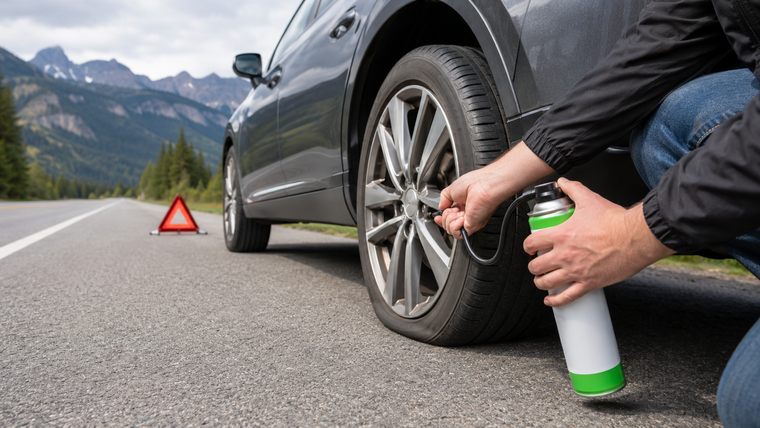
The solution is straightforward but often overlooked: check your pressure regularly, especially during seasonal shifts. Adjusting the inflation to the manufacturer's specs, factoring in actual outdoor temperatures, keeps your tires safe, performing well, and lasting longer all winter.
Of course, you could use nitrogen instead of regular air at your installer. It costs a bit extra, but nitrogen reacts better to temperature changes. Between you and me, though, if you're diligent, you really don't need it.