
Pirelli just gave the tire a job description it never had before: data collector. At the SelectUSA Investment Summit, the Italian manufacturer confirmed that production of its Cyber Tire system is ramping up at its Georgia plant, alongside a new 30% stake in Univrses, a Swedish computer vision company. For a part of the car that most drivers only think about twice a year, that's a significant shift. Here's what the Cyber Tire actually does, why it matters for vehicles built today, and what it means for how you'll buy and maintain tires going forward. (See the article)
What the Cyber Tire Actually Is
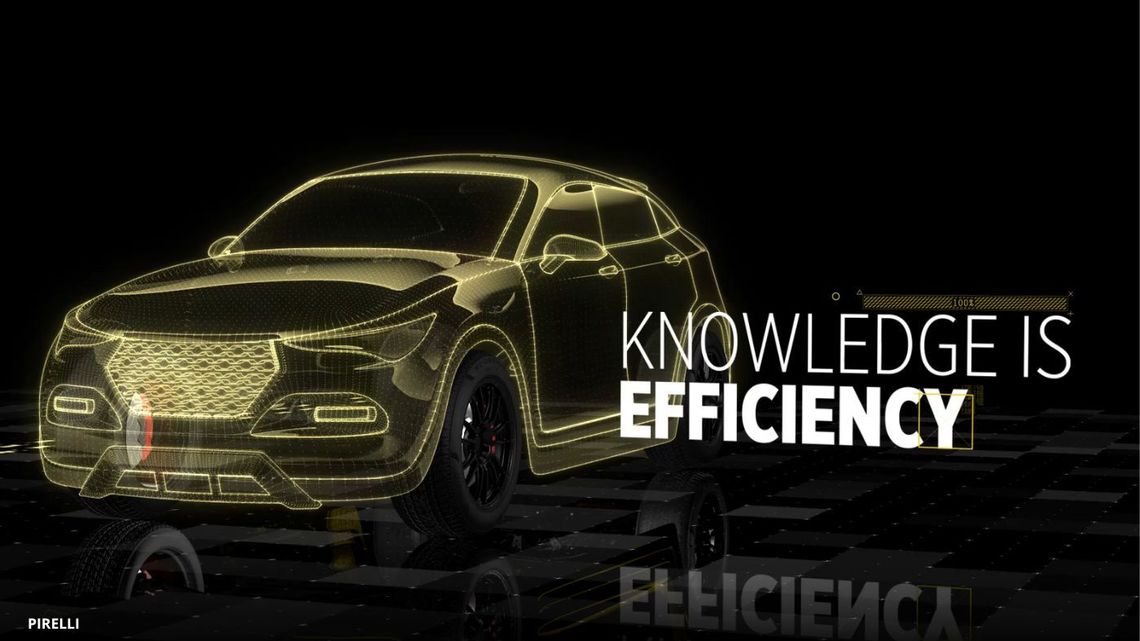
Pirelli describes the Cyber Tire as the first hardware-and-software system built to collect data directly from sensors embedded inside the tire itself, not bolted onto the wheel or wired into the car's electronics separately. Those sensors track pressure, temperature, load, and the tiny deformations the tire undergoes as it rolls. That raw information gets processed through Pirelli's own algorithms and sent, in real time, to the vehicle's control systems.
The tire isn't just holding air anymore. It's the only part of the car that actually touches the road, which makes it one of the richest sources of information about what's really happening under the vehicle: grip, surface conditions, wear patterns, and load distribution. Cars have had plenty of sensors for years. What they haven't had is a reliable read on the contact patch itself, and that's the gap Cyber Tire is built to close.
Why This Is Happening Now
The timing isn't random. The auto industry is moving toward software-defined vehicles, where a car's behavior and performance are shaped less by fixed mechanical settings and more by continuously updated data and code. In that world, a tire that only reports "low pressure" isn't pulling its weight. Systems like traction control, stability management, and advanced driver-assist features all perform better with precise, real-time input from the road surface.
Cyber Tire is already running on high-end platforms, including Aston Martin models developed jointly with Pirelli, and it completed a 1,500-kilometre validation run on a Pagani Utopia Roadster across Europe. These aren't concept demos. The technology is on the road, generating real driving data, right now.
Predictive Maintenance: Goodbye to the Calendar-Based Tire Check
Most drivers replace or rotate tires on a schedule: every so many kilometres, or once a season. That approach treats every tire the same, regardless of how it's actually being used. A tire on a vehicle doing highway commutes wears differently than one doing stop-and-go city driving or hauling a loaded trailer.
Cyber Tire shifts maintenance from a fixed calendar to condition-based monitoring. Instead of guessing when a tire needs attention, the system tracks actual wear, temperature spikes, and load stress as they happen, and flags issues before they become failures. For fleet operators, this means fewer unplanned breakdowns and better-timed replacements. For everyday drivers, it means a tire that can warn you about a developing problem well before a dashboard light or a roadside inspection would catch it.
This matters more in Canada than in milder climates. Extreme cold drops tire pressure fast, road salt and potholes accelerate sidewall stress, and winter-to-summer swaps put tires through cycles most other markets don't deal with. A system that actually tracks condition rather than assuming a fixed wear rate is a genuine advantage here, not just a novelty.
From Your Car to the Road Network: V2V and V2I
Cyber Tire's ambitions go past the individual vehicle. Pirelli has built the system to support vehicle-to-vehicle and vehicle-to-infrastructure communication, meaning the data a tire generates can, in theory, be shared with nearby vehicles or with the road network itself. Combined with Univrses' computer vision technology, Pirelli is already piloting this at a regional level: a project in Italy's Puglia region uses Cyber Tyre data alongside AI-based road scanning to build a continuously updated picture of road surface conditions.
Picture a stretch of highway where black ice is forming. A car equipped with Cyber Tire detects the loss of grip before the driver feels anything, and that information gets relayed to a road maintenance system or to the next car approaching the same stretch. That's the long-term vision: tires that don't just protect the vehicle they're on, but contribute to safer roads generally.
What Should Canadian Drivers Actually Do With This Information
If you're shopping for tires today, Cyber Tire technology isn't something you need to plan around yet. It's currently deployed on select premium and prestige vehicle platforms, not mainstream models, and Pirelli tires equipped with it carry a "C" marking on the sidewall. For the vast majority of drivers, standard TPMS-equipped tires remain the right and only available choice, and that's fine. Good tire maintenance habits don't change:
Check tire pressure monthly, and always before long winter drives, since cold weather drops PSI quickly
Watch tread depth and replace tires before they hit the legal minimum
Inspect for sidewall damage, especially after hitting potholes, which are relentless on Canadian roads
Follow manufacturer rotation schedules to even out wear
What is worth knowing is the direction the industry is heading. Continental has its own connected tire push with ContiSense and RFID-based tire data management, and Dunlop recently introduced Sensing Core, a software approach that estimates tire condition using existing vehicle data rather than adding new sensors. Michelin has used RFID tags for tire tracking for years. Sensor-equipped tires are moving from a luxury-car feature toward something that will eventually reach mainstream vehicles, the same way adaptive suspension and stability control did.
The Data Question Nobody's Ignoring
Any technology that generates real-time driving data raises a fair question: where does that data go, and who gets to use it? Pirelli frames Cyber Tire's data flow around vehicle performance, safety, and infrastructure improvement. But as more vehicle components become connected and data-generating, it's reasonable for drivers to ask how that information is stored, whether it could factor into insurance assessments, and who owns it. These aren't reasons to dismiss the technology, but they're questions worth Transport Canada and provincial regulators keeping an eye on as connected tire systems become more common on Canadian roads.
What This Means Going Forward
The tire is quietly becoming one of the more sophisticated pieces of tech on a modern car. Cyber Tire won't change what you need to do with your current set of tires, but it signals where the industry is headed: tires that report, predict, and communicate rather than just roll. For now, the smartest move for Canadian drivers is the same one that's always worked, keeping up with pressure checks, tread inspections, and seasonal swaps, while keeping an eye on how sensor-based tire tech eventually filters down to the vehicles most of us actually drive.
Not sure which tires are right for your vehicle this season? Our team can help you match tread type, size, and performance needs to how you actually drive, whether that's winter commutes, highway trips, or everyday city driving. Browse our Pirelli tire selection or reach out to a specialist for guidance.