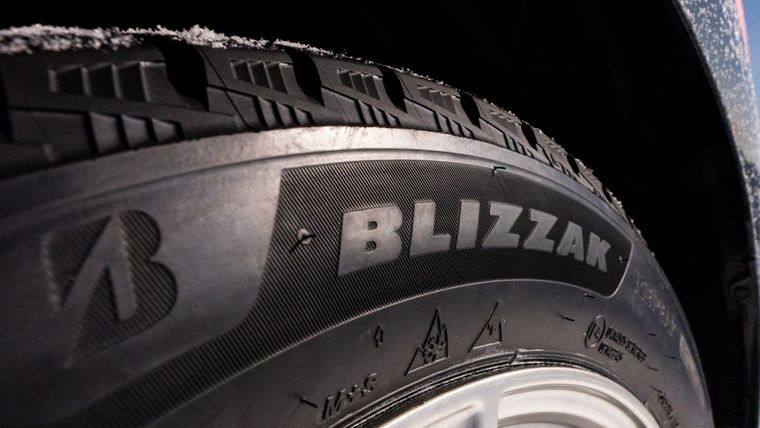


Every time we drive our vehicles, our tires lose a tiny amount of material through contact with the road. This is actually desirable, since it provides the friction needed for proper traction. However, the resulting dust does not simply disappear. Instead, it often ends up in the air, soil and water. To better understand this phenomenon, German researchers are designing a machine with a rather unusual purpose: deliberately wearing down rubber.
Reproducing the Road in a Laboratory
The TERIS project brings together four Fraunhofer institutes specializing in materials, structural durability, chemistry and computer analysis. This month, the consortium announced that it had reached the project’s first major milestone. Researchers have now designed the foundations of a machine capable of reproducing tire abrasion using rubber samples.
They will be able to adjust the load, friction and structure of the surface used during each test. The goal is to recreate conditions comparable to real-world driving without having to manufacture a complete tire and drive it for thousands of kilometres.
The system will need to collect both the particles that remain suspended in the air and those that eventually settle. This machine will therefore do more than simply produce dust: it will also capture it for analysis.
Why Produce Tire Dust?
Traditional road tests are lengthy, expensive and difficult to reproduce under exactly the same conditions. A standardized method like the one proposed by TERIS would make it possible to compare different rubber compounds much more quickly. Manufacturers could refine a new material during the earliest stages of development, well before producing a complete tire.
This research is becoming particularly important with the introduction of the European Union’s Euro 7 standard, which will establish limits for tire abrasion. Before determining whether a product meets those limits, researchers and regulators need a reliable and reproducible way to measure its wear.
Artificial Intelligence Also Enters the Picture
An AI-assisted optical system has also been developed to recognize and classify structures found on worn surfaces. The method has been validated using substitute materials and will be applied to actual rubber samples during the project’s next phase.
The particles will also undergo accelerated ageing to reproduce certain environmental effects, such as exposure to the Sun’s ultraviolet rays. Researchers will then be able to observe how the particles degrade and analyze some of the compounds they release over time.