
An electric vehicle drives very differently from a gas car. It's heavier, it delivers full torque the instant you press the pedal, and it slows itself down every time you lift off. All of that changes what you need from a set of winter tires.
Choosing the best EV winter tires isn't complicated, but a few details matter more than they would on a conventional vehicle: load capacity, size, noise and the effect on range. Get them wrong and you can end up with tires that wear out early, aren't rated for your vehicle's weight, or don't fit the way your manufacturer intended.
This guide explains why EVs are harder on tires, how winter tires affect range, what to check on the sidewall before you buy, and how winter tire rules differ across Canada.
Do Electric Vehicles Really Need Winter Tires?
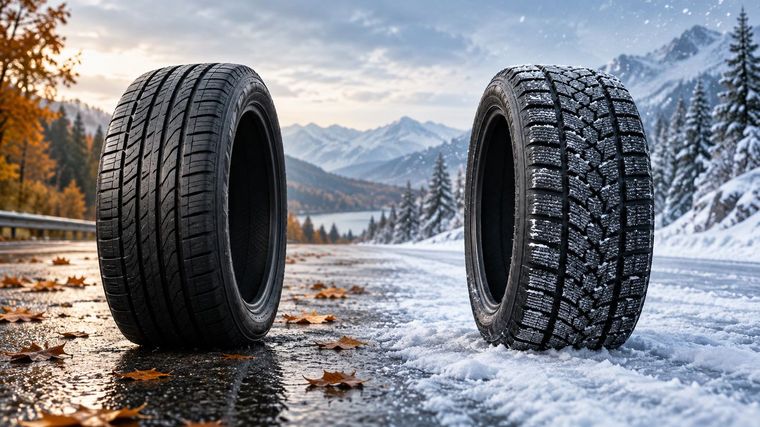
Yes. A battery and electric motors don't change the physics of rubber on ice. As temperatures drop below about 7°C, the compound in all-season tires stiffens and loses grip. Winter tires use softer compounds and dense siping that stay flexible in the cold and bite into snow and ice.
An EV's weight actually makes the case stronger. A heavier vehicle carries more momentum, so it needs more grip to stop and turn. All-wheel drive helps you get moving, but it doesn't help you stop, and traction control can't create grip your tires don't have.
Winter is already demanding on the rest of the vehicle. In CAA's EV Winter Test, driven between Ottawa and Mont-Tremblant at temperatures from -7°C to -15°C, every one of the 14 vehicles fell short of its official range, with losses between 14% and 39%. Your tires shouldn't be one more thing working against you.
Why EVs Are Harder on Winter Tires
Extra weight and the load index
Battery packs add hundreds of kilograms. Yokohama has pointed out that the Ford F-150 Lightning weighs roughly 725 kg (about 1,600 lb) more than a comparable gas-powered F-150.
That's why the load index matters so much. It's the number that follows the tire size (in 255/45R19 104V, the load index is 104), and it tells you the maximum weight each tire can carry at its specified pressure.
Many EVs leave the factory on XL (Extra Load) tires. A newer category, HL (High Load), goes further. Continental gives this example in size 245/40R19: a standard-load tire carries 670 kg, the XL version 750 kg, and the HL version 825 kg, all at the same inflation pressure. HL tires show the letters "HL" in front of the size on the sidewall.
The rule is simple: your winter tires must have a load index equal to or higher than the one specified on your vehicle's door placard or in the owner's manual. Never go lower to save money or because a size happens to be in stock.
Instant torque and regenerative braking
An electric motor produces peak torque from a standstill. On packed snow, that can mean wheelspin the moment you press the pedal. Regenerative braking adds a second challenge: when you lift off, the motor slows the drive wheels, which on ice feels a lot like light braking on one axle.
A good winter compound makes both situations more predictable. You can help too. If your vehicle offers it, use a snow or reduced-power drive mode and a lower regen setting on slippery days.
Faster wear
After a year of testing on a Tesla Model 3, Tire Rack reported that tires wear faster when installed on an EV, and that the figure commonly cited in the industry is about 20% less tread life than on a comparable gas vehicle. Weight is the main reason. Since winter compounds are already softer than all-season compounds, EV owners should check tread depth more often.
Noise
With no engine to mask it, road noise is much more noticeable in an EV. Winter treads, with their deep grooves and open blocks, are usually louder than the quiet low-rolling-resistance tires many EVs come with. Some EV-specific winter tires address this directly, such as the Nokian Hakkapeliitta R5 EV, which uses Nokian's SilentDrive noise-reduction technology.
How Winter Tires Affect EV Range
Here's the honest answer: most winter tires have higher rolling resistance than the low-rolling-resistance tires EVs wear from the factory. Expect a small range penalty on top of the battery's normal cold-weather loss. Michelin has estimated that a 30% increase in rolling resistance raises energy use by roughly 3% to 5%.
That trade-off is worth making. A few percent of range is a small price for shorter stopping distances on ice. Tires also aren't the biggest factor in winter range. Speed, cabin heating and battery temperature usually matter more.
You can recover some of that range:
Keep pressure on target. Tire pressure drops about 1 PSI (7 kPa) for every 5°C drop in temperature. Under-inflated tires add rolling resistance and wear faster. Check them every two weeks, when cold, and set them to the pressure on your door placard.
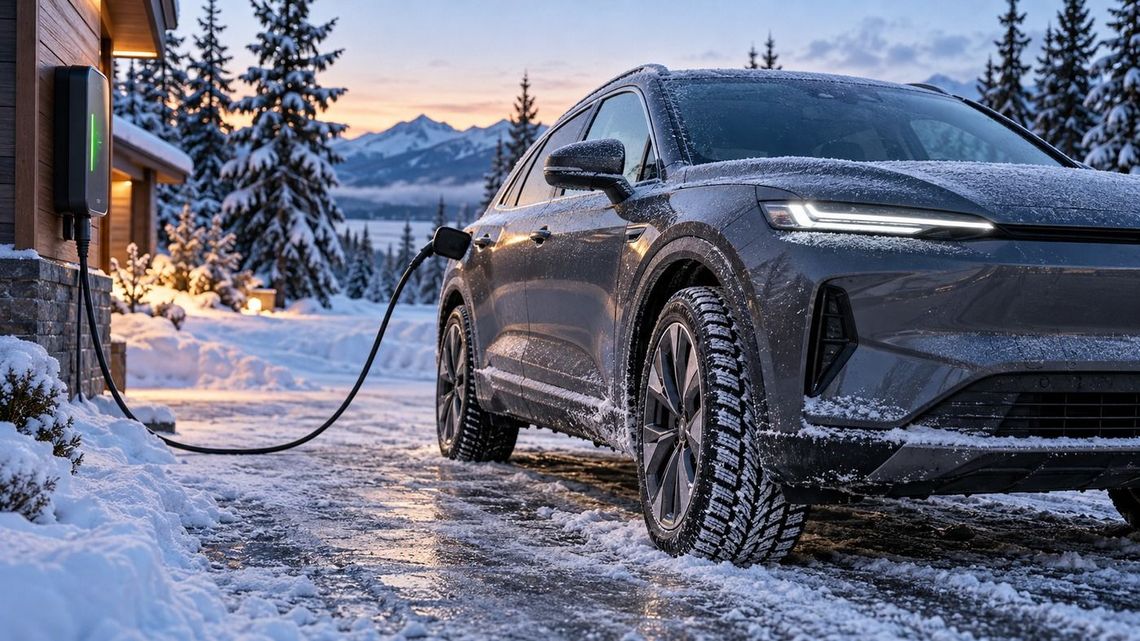
Precondition while plugged in. CAA recommends warming the cabin and battery before you unplug, so the energy comes from the grid instead of your battery.
Consider an EV-designed winter tire. Several manufacturers now offer winter models built to reduce rolling resistance while keeping ice and snow grip.
Don't oversize. A narrower tire on a smaller wheel generally has less rolling resistance and also cuts through snow better than a wide, low-profile tire.
What to Look for When Buying EV Winter Tires
Before you buy, check these points:
The three-peak mountain snowflake symbol. It confirms the tire passed a standardized severe-snow traction test. It's the clearest way to identify a true winter tire, and it's required in Quebec.
A load index equal to or higher than your vehicle's specification. If your EV calls for XL or HL tires, your winter set must match.
An approved size. Many EV owners move to a smaller rim diameter for winter, for example from 21-inch to 19-inch wheels. It's often cheaper and better in snow, but only use a size your manufacturer approves, confirm the wheel clears the brake calipers, and keep the overall diameter within specification.
An acceptable speed rating. Winter tires often carry a lower speed rating than summer or all-season tires. Check your owner's manual for what your manufacturer allows, and always respect the tire's own limit.
An EV designation, if available. Tires marked or marketed for EVs are a bonus, not a requirement. Load index, size and winter certification matter far more.
TPMS compatibility. If you buy a separate set of winter wheels, you'll usually need tire pressure sensors that work with your vehicle, and some models require a relearn procedure after installation.
Dedicated Winter Tires or All-Weather Tires for Your EV?
All-weather tires carry the three-peak mountain snowflake symbol and stay on all year, so there's no seasonal changeover and no second set of wheels to store. For an EV owner in a milder region, such as coastal British Columbia or the southwestern corner of Ontario, they can be a sensible choice.
Where winters are long, cold and icy, from the Prairies and Northern Ontario to Quebec, the BC Interior and much of Atlantic Canada, a dedicated winter tire still gives the best ice braking. With the extra weight of an EV, that advantage counts.
Keep insurance in mind as well. Some Ontario insurers don't grant their winter tire discount for all-weather tires left on year-round, so ask before you choose.
Winter Tire Rules and Insurance Across Canada
Electric vehicles follow the same rules as every other passenger vehicle. Here are the main ones:
Quebec: Winter tires are mandatory from December 1 to March 15 on all passenger vehicles registered in the province, and they must carry the three-peak mountain snowflake symbol (source: SAAQ).
British Columbia: Winter tires are required on most designated highways from October 1 to March 31, extended to April 30 on some mountain passes and high-snowfall routes. Tires must carry either the mountain snowflake symbol or the M+S marking and have at least 3.5 mm of tread. All-wheel drive doesn't exempt you, and the fine is $121 (source: BC Ministry of Transportation and Transit).
Ontario: There's no legal requirement, but since 2016 every auto insurer must offer a discount to drivers who install winter tires. The amount and the qualifying dates vary by insurer (source: FSRA).
Other provinces and territories: There's no general legal requirement, but winter tires are strongly recommended anywhere snow and ice are a regular part of winter. Some private insurers outside Ontario also offer a discount, so it's worth asking.
Common Mistakes to Avoid
Choosing a lower load index to save money or find a size in stock. This is the most important rule for any EV.
Installing only two winter tires. Always use four matching winter tires. Mixing tire types between axles reduces stability, especially under braking and regen.
Using wheels that aren't rated for your EV. Aftermarket winter wheels must match your vehicle's bolt pattern, centre bore and offset, and have a load rating suited to its weight.
Ignoring tire pressure through the coldest months.
Leaving winter tires on all summer. The soft compound wears quickly in the heat, and you'll lose braking performance on warm, dry roads.
How to Care for Your EV Winter Tires
A few habits will keep your tires safe and help them last:
Check pressure every two weeks, always when the tires are cold.
Rotate every 8,000 to 10,000 km, or sooner if you notice uneven wear. EVs benefit from regular rotation because of their weight and torque.
Watch your tread depth. Winter performance drops noticeably once tread gets below about 5 mm. BC requires at least 3.5 mm on designated highways.
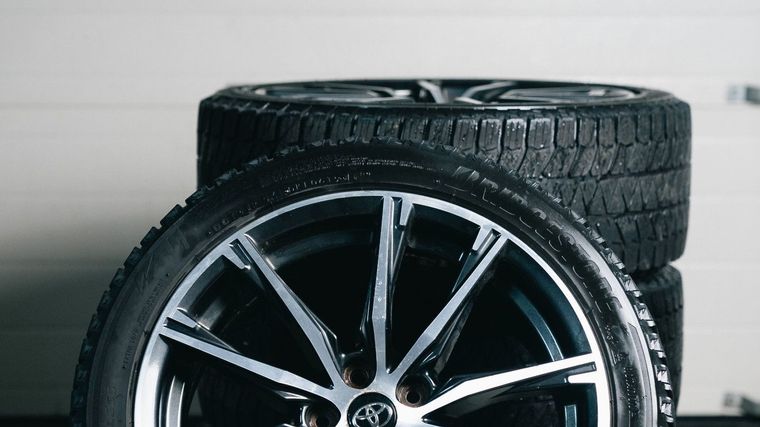
Store them properly in the off-season. Clean them, keep them in a cool, dry place away from sunlight and electric motors, and store tires on rims stacked or hung, and tires without rims upright.
Keep your records. Save your purchase receipt and rotation records. They can help with warranty claims, and some insurers ask for proof of installation.
Frequently Asked Questions
Can I put regular winter tires on my EV? Yes, as long as the size is approved for your vehicle and the load index is equal to or higher than the original specification. An EV-specific model is optional.
Do I need four winter tires on an AWD electric vehicle? Yes. All-wheel drive helps you accelerate, but braking and cornering depend on all four tires. Mixing tire types makes the vehicle less stable.
Will winter tires reduce my EV's range? Slightly, in most cases. The bigger range losses in winter come from the battery and cabin heating. Proper pressure and preconditioning help offset the difference.
Do I need new TPMS sensors for a winter wheel set? Usually, yes. Without compatible sensors, most EVs will display a warning light all winter. Check what your model needs before you order.
Conclusion
EV winter tires do the same job as any winter tire: keeping you in control on cold, snowy and icy roads. What changes is the margin for error. Your EV's weight, instant torque and regenerative braking put more demand on the tires, so load index, size and winter certification deserve extra attention.
Start with your door placard, look for the three-peak mountain snowflake symbol, and never accept a lower load index. Then keep the pressure on target all season.
Ready to equip your electric vehicle for winter? Browse winter tires and wheels on Blackcircles.ca, with delivery across Canada.