
We all know the situation: a nail punctures one tire while the other three are still perfectly usable. On a two-wheel-drive car, the solution can be relatively simple. On an all-wheel-drive vehicle, however, the question becomes more complicated. Do you really need to buy four tires because of one particularly poorly placed sharp object? Not necessarily, but you need to start by measuring rather than guessing.
Why Do the Tires Need Similar Wear Levels?
An all-wheel-drive system distributes power between all four wheels. For the system to operate correctly, the tires must have sufficiently similar dimensions, characteristics and circumferences. A new tire has deeper tread than a worn tire. Its circumference is therefore slightly larger, meaning it completes fewer rotations while travelling the same distance. The system may interpret this difference as wheel slip and continually attempt to compensate for it.
Over time, a significant difference can accelerate wear on certain drivetrain components. However, not every system reacts in the same way. There is no universal tolerance that applies to every vehicle, so the owner’s manual remains the proper reference.
Can You Replace Only Two Tires?
It is sometimes possible to replace two tires on an all-wheel-drive vehicle, particularly when the two remaining tires are still relatively new. The new tires must meet the recommended size, type, load capacity and speed rating for the vehicle. Their tread depth must also be compared with that of the remaining tires. Two tires can still look perfectly good while already being too worn to pair with a new set.
When only one pair is replaced, the tires with the deepest tread are generally installed on the rear axle. This arrangement helps preserve the vehicle’s stability on wet roads, but the tires must still remain within the tolerances established for the all-wheel-drive system.
Do You Always Need to Buy Four Tires?
If the remaining tires are already fairly worn, replacing all four is often the simplest solution. The vehicle maintains consistent handling, and the difference in tire circumference is eliminated. When the other three tires are still in excellent condition, another option may be available: shaving a new tire so its tread depth matches theirs. The process may seem slightly absurd, but it can prevent three perfectly usable tires from going to waste. The replacement tire must still be compatible and should ideally be the same model.
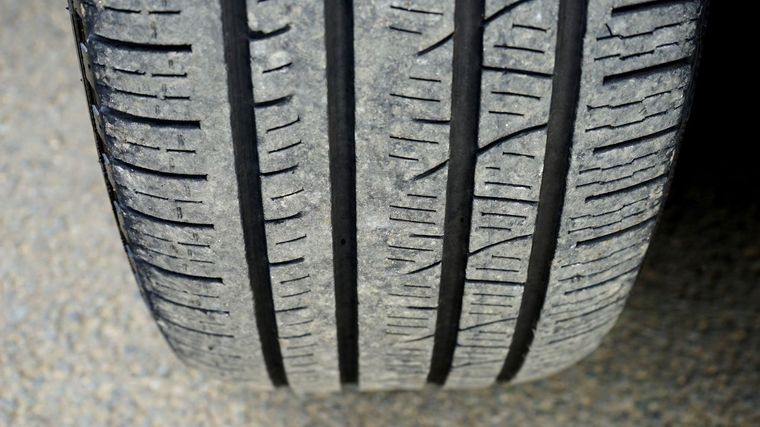
Before automatically ordering two or four tires, have the ones already on the vehicle measured. A difference of only a few thirty-seconds of an inch can sometimes separate a reasonable repair from a much larger bill.