
It happens every fall. The first snow falls on a Tuesday morning, and by Wednesday every tire shop in town is booked solid for two or three weeks. Meanwhile, thousands of drivers are still out on summer or all-season tires, on roads that don't forgive mistakes.
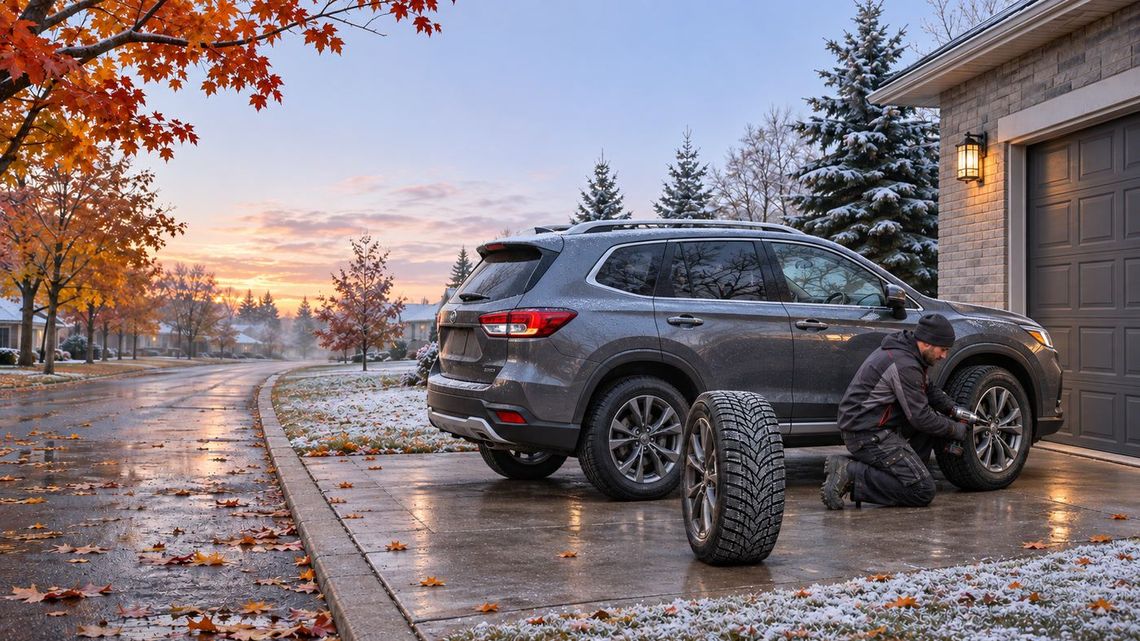
So when should you put on winter tires? The short answer: as soon as temperatures consistently drop below 7°C, and ideally a little before. Even if fall afternoons are still mild, getting ahead of the season saves you from two very real problems: the garage rush and being caught off guard by an icy road.
This guide covers how to spot the right moment for your region, what the law says from one province to the next, and what to check before your winter tires go on.
The 7°C Rule: The Real Signal to Install Winter Tires
Snow shouldn't be what triggers your tire changeover. Temperature should.
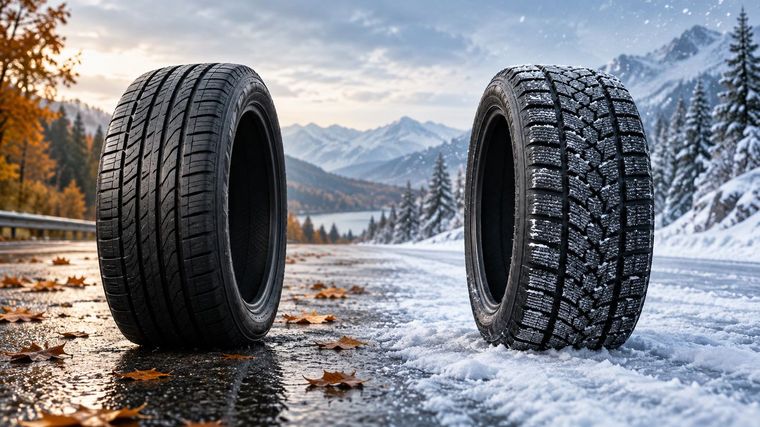
Below 7°C, the rubber in summer tires and most all-season tires starts to stiffen. Harder rubber can't grip the small irregularities in the pavement as well, so traction drops, even on a dry or simply wet road. Winter tires use a rubber compound designed to stay flexible in the cold, plus deeper tread and dense siping that bite into snow, slush and ice.
That's why the Tire and Rubber Association of Canada recommends putting winter tires on once the temperature drops below that threshold, without waiting for the first snowfall.
Which Temperature Should You Watch?
Don't go by the afternoon high. A sunny 11°C at 3 p.m. can easily hide a -2°C reading when you leave for work. Watch the daily average instead: when it hovers around 7°C for several days in a row, it's time.
Morning and evening temperatures matter too, since that's when most people drive and when frost forms. And keep an eye on the 14-day forecast. It gives you enough lead time to order tires and book an appointment.
Why a Mild Fall Day Can Fool You
This is the classic trap. It's warm, the leaves are still on the trees, and it feels like there's plenty of time. But a pleasant afternoon doesn't protect you from what the road looks like at 7 a.m.
Fall nights cool down fast. Bridges, overpasses and shaded stretches freeze first, often before the rest of the road. On damp pavement, a thin layer of black ice can form too. It's nearly invisible, and that's exactly where cold-stiffened tires lose their grip.
The first snowfall rarely shows up on schedule, either. Snow in late October or early November is nothing unusual in most of the country. And don't trust a warm spell: a mild week after the first cold snap creates a false sense of security, but the cold comes back, often without much warning.
The logic is simple: it's better to be early than sorry. Running winter tires through a few weeks of mild weather causes a little extra wear. Getting caught on summer tires during an icy morning commute can cost a lot more.
Get Ahead of the Garage Rush
The second reason to install your winter tires a bit earlier is purely practical. Everyone reacts to the same trigger: the first snowfall, or an approaching legal deadline such as Quebec's December 1 requirement. Demand spikes within days.
Waiting until the last minute usually means waiting days, sometimes weeks, for an appointment. It also means fewer choices, since the most common sizes and the most popular models can run short when demand peaks.
Service quality takes a hit as well. During the rush, technicians move from one vehicle to the next. Off-peak, they have more time to inspect your tires, check lug nut torque and set your pressure correctly.
Buying New Tires? Factor In Shipping Time
If last year's winter tires are too worn, the timeline changes. It's no longer just a matter of finding an appointment: your tires have to arrive first. It's a step many drivers forget to plan for.
At peak season, that timeline can stretch. When everyone buys tires the same week, warehouses and carriers run at full capacity. Tires for SUVs, pickups or performance vehicles, along with some less common sizes, can be in limited supply and take longer.
Location plays a role too: delivery can take a few extra days in remote or harder-to-reach areas. And an early storm slows shipping right when you need your tires most.
The fix is simple: order new tires ahead of time, before the cold sets in. You get the best selection of models and sizes, your tires arrive without stress, and you can book installation as soon as temperatures drop. Your tires wait for you, not the other way around.
How to Plan It
For new tires, order a few weeks before you want to be driving on them, ideally early in the fall. Then book your installation right away, keeping delivery time in mind. If you swap tires every season, consider a set of winter tires already mounted on wheels. Each changeover becomes faster in the fall and spring, and your tires aren't being pulled off and remounted on rims twice a year.
When to Put On Winter Tires by Region
Canada is big, and the cold doesn't arrive everywhere at once. The timing below is a general guide. Your local forecast is still your best reference.
The territories and northern parts of the provinces: September or early October.
The Prairies (Alberta, Saskatchewan, Manitoba): late September to mid-October. Snow can show up early here.
British Columbia: before October 1 if you drive in the Interior, the North or on mountain highways. On the South Coast, the cold arrives later, but a trip to Whistler or the Okanagan changes everything.
Ontario: October in Northern Ontario, late October to mid-November in the south.
Quebec: late October to early November in most regions, earlier in Abitibi, Saguenay and the North Shore, and always before December 1.
Atlantic Canada: late October to mid-November. The mix of rain, freezing rain and snow makes roads especially unpredictable.
Winter Tire Laws Across Canada
The rules vary widely from province to province. Here are the main ones:
Quebec: winter tires are mandatory from December 1 to March 15 inclusive for vehicles registered in Quebec, with some exceptions. According to the Government of Quebec, the fine ranges from $200 to $300 plus fees. Studded tires are allowed from October 15 to May 1. Every fall, the provincial transportation ministry, the SAAQ and CAA-Québec urge drivers to install their tires well before the deadline.
British Columbia: winter tires (or chains) are required on most designated highways from October 1 to March 31, extended to April 30 on mountain passes and high-snowfall routes. The Lower Mainland and southeastern Vancouver Island are exempt. B.C. law accepts tires marked M+S or carrying the three-peak mountain snowflake symbol, though M+S tires generally offer less traction in severe winter conditions.
Ontario: no legal requirement, but since 2016, insurers have been required to offer a discount to drivers who use winter tires. The amount and conditions vary by insurer, so ask yours.
Manitoba: no requirement either, but Manitoba Public Insurance offers low-interest financing of up to $2,000 to help drivers buy winter tires.
Other provinces and territories: no general requirement, but winter tires are strongly recommended by authorities and automobile associations.
Keep one thing in mind: a legal date is a minimum, not a safety schedule. The weather doesn't check the highway code before it snows.
The Risks of Waiting Until the Last Minute
Driving on summer or all-season tires in the cold isn't just a snow problem. Stiff rubber brakes poorly on cold, wet or icy pavement, so your stopping distances get longer. In curves and on highway ramps, where lateral grip matters most, the risk of losing control goes up.
A collision brings its own fallout: your deductible, time without a vehicle and a possible premium increase if you're found at fault. In Quebec and on designated B.C. highways, add the risk of a fine on top of that.
What If I Put Them On Too Early?
It's a common concern, and a fair one. The softer compound in winter tires does wear a bit faster on warm pavement. But a few mild weeks in October or November represent only a small fraction of your tires' lifespan.
The real problem is leaving winter tires on all summer. As the Government of Quebec points out, they don't evacuate water as well on warm, wet roads, which raises the risk of hydroplaning. The ideal balance is simple: put them on early in the fall, and take them off in the spring once temperatures stay consistently above 7°C.
Your Pre-Installation Checklist
Before your winter tires go on, take five minutes to check the following:
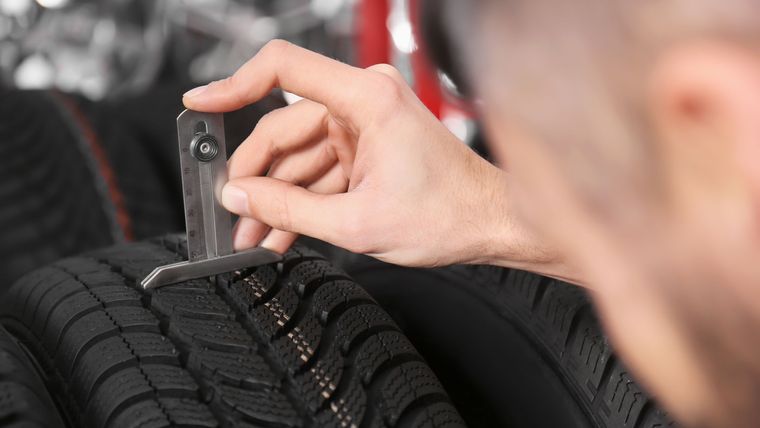
Tread depth: look at the wear bars in the grooves. For winter driving, most experts recommend replacing tires at around 4 mm (5/32"), well before the legal minimum, because snow traction drops quickly as tread wears.
Tire age: the last four digits of the DOT code show the week and year of manufacture. Rubber hardens over time, even when the tread looks fine. Past five or six years, have them inspected.
The right symbol: look for the three-peak mountain snowflake on the sidewall. It certifies the tire for severe snow conditions.
Tire pressure: cold weather lowers it by roughly 1 PSI for every 5°C drop. Check it when the tires are cold, at least once a month in winter.
Lug nut torque: have the nuts re-torqued after 50 to 100 km, especially with alloy wheels.
Always four tires: never install just two winter tires. Mixing tire types unbalances the vehicle and increases the risk of a skid.
Frequently Asked Questions
Are all-season tires good enough for winter?
Not in Canada. Standard all-season tires lose grip below 7°C. All-weather tires with the snowflake symbol are certified for winter and can be a reasonable compromise in some regions, but a dedicated winter tire still performs better on ice and in heavy snow.
Can I buy my tires now and have them installed later?
Yes, and it's often the smartest approach. You get a better selection of models and sizes, then book installation as soon as the mornings turn cold.
When should I take my winter tires off?
In the spring, once temperatures consistently stay above 7°C. In Quebec, the law allows it starting March 16. In British Columbia, wait until the requirement ends on the routes you drive, either March 31 or April 30.
The Smart Move: Act Before the First Icy Morning
Knowing when to put on winter tires really comes down to not waiting. Once temperatures start hovering around 7°C, nice afternoon or not, it's time to act. You'll skip the garage rush, keep your pick of tires and avoid being surprised by the first patch of ice.
Find winter tires for your vehicle's size on Blackcircles.ca, compare models from the top brands and get a head start on the cold season.