

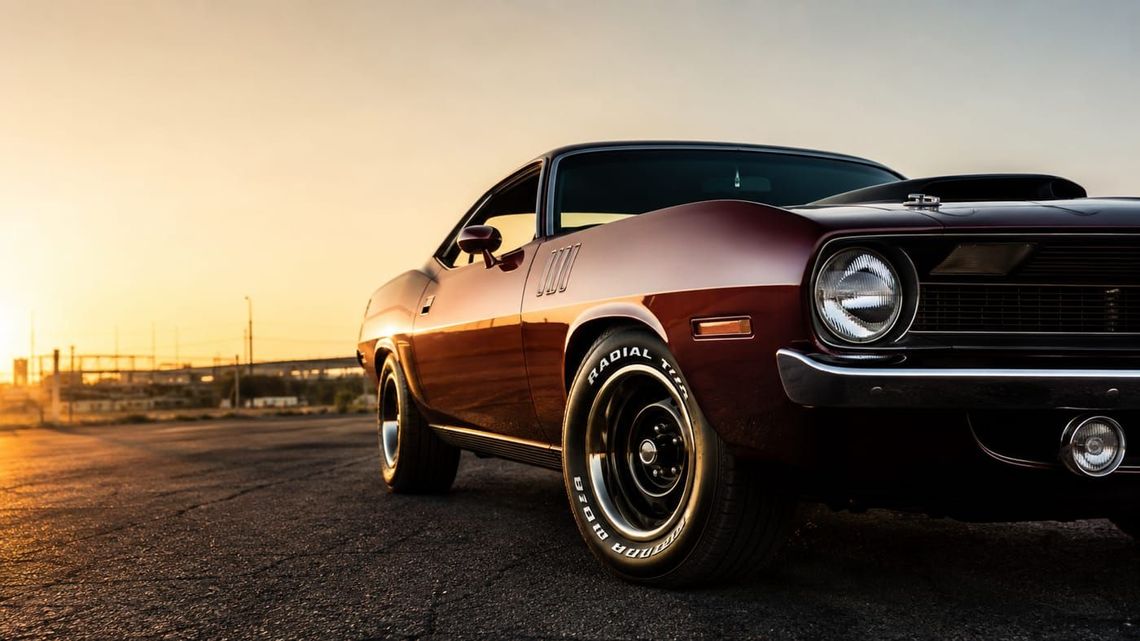
Muscle cars are more than just vehicles. They are symbols of power, attitude, sound, and performance. From classic icons like the Ford Mustang, Chevrolet Camaro, Dodge Charger, Pontiac GTO, Plymouth Barracuda, Chevrolet Chevelle, and Oldsmobile 442 to modern machines like the Dodge Challenger, Mustang GT, Camaro SS, and Charger Scat Pack, muscle cars are built to deliver a driving experience that feels bold and exciting. But no matter how powerful the engine is, every muscle car depends on one critical component to transfer that power to the road: the tires.
Choosing the right muscle car tires can completely change the way a vehicle feels. Tires influence acceleration, braking, handling, comfort, road noise, wet-weather control, and overall appearance. A great set of tires can make a muscle car feel planted, responsive, and confident. The wrong tires can make the same car feel loose, unpredictable, or unable to use its power effectively.
Whether you are restoring a classic muscle car, upgrading a weekend cruiser, building a street-and-strip machine, or maintaining a modern high-horsepower performance car, understanding your tire options is essential. This guide explains what to look for when choosing muscle car tires and how to match the right tire to your driving style.
Why Tires Matter So Much on a Muscle Car
Muscle cars are famous for torque. That low-end power is what gives them their dramatic acceleration and unmistakable personality. However, torque also puts heavy demand on the tires, especially on rear-wheel-drive vehicles. If the tires cannot grip properly, the result is wheel spin instead of forward motion.
This is especially important for older muscle cars. Many classics were originally equipped with tire technology that is outdated by modern standards. Bias-ply tires were common during the golden era of muscle cars, but today’s radial tires offer better stability, improved tread life, stronger wet traction, and more predictable handling. For many classic car owners, switching to modern radial tires is one of the easiest ways to improve safety and drivability without changing the character of the vehicle.
Modern muscle cars also require careful tire selection. Today’s performance cars often produce far more horsepower than their vintage ancestors. A Mustang GT, Camaro SS, or Dodge Challenger can easily overwhelm ordinary tires. Performance tires help manage that power by providing better grip during launches, sharper steering response, and improved braking stability.
Classic Muscle Car Tires
For many enthusiasts, appearance matters almost as much as performance. Classic muscle car tires often feature raised white letters, redline sidewalls, white stripes, or vintage-inspired tread patterns. These details help preserve the original look of the car and can make a major difference in the vehicle’s overall stance.
Raised white letter tires are especially popular on 1960s and 1970s muscle cars. They give the vehicle an aggressive, period-correct appearance that looks right at home on models like the Chevelle SS, Dodge Charger, Plymouth Road Runner, Mustang Mach 1, Pontiac Firebird, Camaro Z/28, and Ford Torino. The white lettering adds visual contrast to the sidewall and helps create the bold, old-school look that many muscle car owners want.
Two of the most popular tire models for this vintage muscle car style are the BFGOODRICH Radial T/A and the COOPER Cobra Radial G/T. Both are well known among classic car enthusiasts for their raised white letter sidewall design, making them strong choices for drivers who want a period-inspired appearance without giving up the benefits of radial tire construction.
The BFGOODRICH Radial T/A is one of the most recognizable muscle car tires. It has long been associated with classic American performance cars, hot rods, and weekend cruisers. Its raised white letters, wide footprint, and traditional styling make it a natural fit for restored and modified muscle cars that need a tire with authentic street-machine character.
The COOPER Cobra Radial G/T is another excellent option for vintage-inspired builds. It offers the same raised white letter look that suits classic muscle cars, pony cars, and hot rods, while also delivering a comfortable ride for cruising. For owners who want their car to look era-correct at shows, meets, and summer drives, the Cobra Radial G/T is a strong match.
Some owners choose reproduction-style tires to maintain authenticity for shows and restorations. Others prefer modern radial tires with classic sidewall styling, such as the BFGOODRICH Radial T/A or COOPER Cobra Radial G/T. This gives them the best of both worlds: vintage looks with improved ride comfort, road manners, and everyday drivability.
Performance All-Season Tires
Performance all-season tires are a practical option for muscle car owners who drive regularly in a variety of conditions. These tires are designed to offer a balance of dry grip, wet traction, comfort, and tread life. They are not true winter tires and should not be treated as such, but they can handle cooler temperatures better than summer performance tires.
For a street-driven muscle car, performance all-season tires can be a smart choice. They provide enough grip for normal spirited driving while remaining comfortable on highways and city streets. They also usually last longer than aggressive summer tires or drag radials.
This type of tire is ideal for drivers who want their car to be enjoyable and predictable without needing maximum track-level performance. If your muscle car is used for weekend drives, casual cruising, car meets, or occasional commuting, a performance all-season tire may offer the best balance.
Summer Performance Tires
Summer performance tires are designed for warm-weather grip. They use specialized rubber compounds that stay flexible and responsive in higher temperatures. Compared with all-season tires, they usually provide better dry traction, sharper handling, and stronger braking performance.
For modern muscle cars, summer performance tires can make a dramatic difference. High-powered vehicles need tires that can handle acceleration, cornering, and heat. A good summer performance tire can help reduce wheel spin, improve steering precision, and make the car feel more controlled during aggressive driving.
However, summer tires are not designed for cold weather, snow, or ice. When temperatures drop, the rubber can become stiff, which reduces grip. In some cases, using summer tires in freezing conditions can even damage the tire. If you live in a region with cold winters, you should store summer performance tires during the off-season and use proper winter or cold-weather tires if the car is driven year-round.
Drag Radials for Straight-Line Grip
Drag radials are a popular choice for muscle car owners who care about straight-line acceleration. These tires are designed to provide strong launch traction, especially when warmed up properly. They are commonly used on high-horsepower street cars and vehicles that regularly visit the drag strip.
The advantage of drag radials is simple: they help put power to the pavement. If your car spins too easily during hard launches, drag radials can improve traction and help produce quicker acceleration times. They are especially useful for modified engines, supercharged setups, and powerful rear-wheel-drive builds.
But drag radials come with trade-offs. They often wear faster than regular performance tires, may be less effective in heavy rain, and can feel less balanced during cornering. For a dedicated weekend car or street-and-strip build, they can be excellent. For a daily-driven muscle car, they may not be the most practical option.
Touring Tires for Cruising Comfort
Not every muscle car needs the most aggressive tire available. Some owners use their vehicles mainly for relaxed drives, car shows, highway cruising, or long-distance road trips. In these cases, a touring or grand touring tire may be a better fit.
Touring tires are designed to provide a smoother ride, reduced road noise, and longer tread life. They do not offer the same performance as summer tires or drag radials, but they can make a heavy classic muscle car much more comfortable to drive. For larger vehicles like classic Chargers, Challengers, Impalas, and other big-block cruisers, comfort can be just as important as grip.
A grand touring tire may be the right choice if your priority is enjoying the drive rather than chasing lap times or quarter-mile numbers.
Choosing the Right Tire Size
Tire size has a major impact on both performance and appearance. A wider tire can provide more grip, especially at the rear, but only if it fits properly. A tire that is too wide may rub against the fender, suspension, or inner wheel well. This is especially common on classic cars with aftermarket wheels or lowered suspension.
Tire diameter is also important. A taller tire can create a classic muscle car stance and provide more sidewall cushioning. This can improve ride comfort and help with straight-line traction. A shorter, lower-profile tire can improve steering response and create a more modern look, but it may also produce a firmer ride.
When changing tire size, you should consider wheel width, offset, suspension clearance, fender clearance, speedometer accuracy, and overall tire diameter. On classic muscle cars, even small fitment changes can affect how the vehicle sits and drives. For modern muscle cars, tire size can also affect traction control, stability systems, and handling balance.
Staggered vs. Square Tire Setups
A staggered tire setup means the rear tires are wider than the front tires. This is a common choice for muscle cars because it improves the vehicle’s stance and can provide better rear traction. Since most muscle cars are rear-wheel drive, wider rear tires help manage engine torque and create a more aggressive appearance.
The downside is that staggered tires cannot usually be rotated front to rear. This can lead to uneven wear and shorter tire life. A square setup, where all four tires are the same size, allows easier rotation and more balanced handling. It may also be more practical for drivers who use their cars often.
If your priority is appearance and rear-wheel traction, a staggered setup may be ideal. If your priority is tire life, rotation flexibility, and balanced handling, a square setup may be the better choice.
Wet Weather Performance
Many muscle cars are fair-weather vehicles, but wet traction still matters. Rain can happen unexpectedly during a road trip, car show weekend, or evening cruise. Because muscle cars often have high torque and rear-wheel drive, poor wet grip can quickly become a safety concern.
Tires with proper tread patterns help channel water away from the contact patch. This reduces the risk of hydroplaning and improves braking control on wet pavement. Summer performance tires can offer good wet traction in warm conditions, but drag radials and vintage-style tires may require more caution.
If you plan to drive your muscle car on public roads, avoid choosing tires based only on dry-weather performance. A tire that grips well in the rain can make the car much safer and more enjoyable.
Tire Age and Replacement
Muscle car tires often age before they wear out. Many classic cars are driven only during the warmer months and may cover limited mileage each year. Even if the tread still looks good, the rubber can harden over time. Old tires may lose grip, develop cracks, vibrate, or become more prone to failure.
Storage conditions make a difference. Tires exposed to sunlight, moisture, temperature changes, or long periods of sitting can age faster. If your muscle car is stored for the winter, it is important to maintain proper tire pressure and reduce flat-spotting when possible.
Before every driving season, inspect your tires for cracks, bulges, uneven wear, and loss of pressure. If the tires are old or show signs of deterioration, replacement is a smart investment in safety.
Matching the Tire to Your Muscle Car
The best muscle car tire depends on how the car is used. A restored show car may need classic-style tires with period-correct sidewalls. A weekend cruiser may benefit from performance all-season tires. A modern high-horsepower car may need summer performance tires to feel properly controlled. A drag-focused build may require drag radials for maximum launch traction.
There is no single perfect tire for every muscle car. The right choice depends on power level, driving habits, climate, wheel size, suspension setup, and personal style. Before buying tires, think about where the car spends most of its time. Is it mainly driven to shows? Used for highway cruising? Built for spirited street driving? Taken to the drag strip? Your answer should guide your tire choice.
For many vintage-inspired builds, the visual style of the tire is part of the decision. A tire like the BFGOODRICH Radial T/A or COOPER Cobra Radial G/T can help preserve the old-school muscle car look thanks to the raised white letter sidewall. These tires are especially appealing for drivers who want their car to feel period-correct while still benefiting from a radial design suited to modern roads.
Final Thoughts
Muscle car tires are one of the most important upgrades or maintenance choices you can make. They affect how the vehicle accelerates, corners, brakes, rides, and looks. A powerful engine may define the character of a muscle car, but the tires determine how much of that power reaches the road.
For classic style, raised white letter tires can complete the look, especially models like the BFGOODRICH Radial T/A and COOPER Cobra Radial G/T. For comfort and everyday drivability, touring or performance all-season tires may be the smartest option. For warm-weather grip and sharper handling, summer performance tires are hard to beat. For straight-line traction, drag radials can help high-powered cars launch harder and faster.
The key is to choose tires that match the car’s purpose. When you select the right tires, your muscle car becomes more enjoyable, more capable, and more confident. Whether you drive a restored classic, a modern V8 coupe, or a modified street machine, the right set of tires will help your car deliver the performance, presence, and excitement that muscle cars are known for.