
Truck and SUV owners ask this question every fall: can the all-terrain tires already on the vehicle just carry through winter, or is a dedicated set of winter tires still worth the cost and the hassle of two changeovers a year? The honest answer depends less on the tire's aggressive looks and more on a small pictogram most drivers have never noticed on the sidewall. Here's what actually separates an all-terrain tire that can handle a Canadian winter from one that only looks like it can.
What All-Terrain Tires Are Actually Built For
All-terrain (AT) tires are designed around a wide range of surfaces: gravel, dirt, mud, rock, and pavement, with a tread pattern built for durability and traction off the beaten path. The compound is usually firmer than a winter tire's, because a softer compound would wear out fast on rough terrain and under the heavier loads trucks and SUVs typically carry.
That firmness is exactly the trade-off that matters in winter. Rubber compounds naturally stiffen as temperatures drop, and a compound designed to stay tough on gravel is starting from a harder baseline than a winter-specific compound engineered to do the opposite: stay pliable well below freezing.
Why Most All-Terrain Tires Struggle in True Winter Conditions
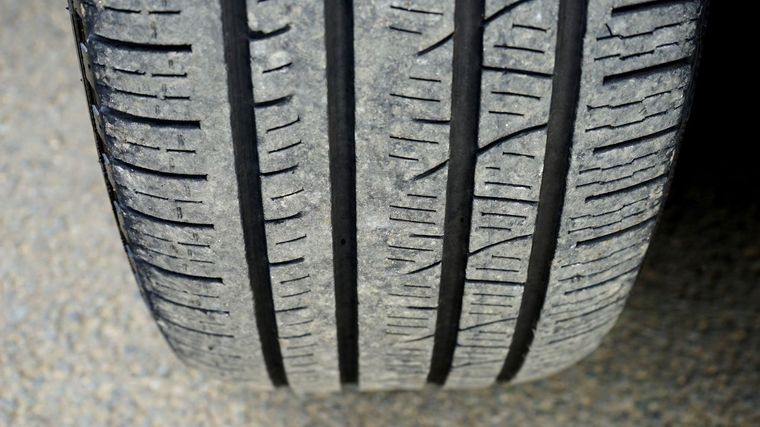
The tread blocks on an AT tire are typically large and widely spaced, which is great for shedding mud but does less for biting into packed snow or gripping glare ice. Dedicated winter tires rely heavily on dense siping, the thin slits cut across tread blocks that create hundreds of extra biting edges. AT tires generally have far less siping, since too much would compromise the tread block stiffness needed for off-road durability.
The result on snow and ice: longer stopping distances, reduced cornering grip, and less predictable behaviour in slush and freezing rain, even on a well-known, reputable AT tire. This isn't a flaw in the tire; it's simply not what the tire was engineered to prioritize.
The Symbol That Actually Matters: 3PMSF vs. M+S
Almost every AT tire carries an "M+S" (Mud and Snow) marking on the sidewall. That marking is based on tread pattern geometry alone and requires no cold-weather performance testing. It tells you the tire can handle mud and light snow, not that it performs safely in genuine winter conditions.
The Three-Peak Mountain Snowflake symbol (3PMSF), a small mountain-and-snowflake icon on the sidewall, is different: it's only awarded to tires that pass standardized snow traction testing. A growing number of AT tires now carry both markings, meaning the tire's compound and tread were specifically validated for winter performance, not just given a mud-and-snow tread pattern. Models like the BFGoodrich All-Terrain T/A KO3, the Falken Wildpeak A/T4W, and the Cooper Discoverer Stronghold AT are current examples of 3PMSF-certified all-terrain tires.
This distinction isn't just a performance detail. Several insurers offer premium discounts specifically for 3PMSF-equipped vehicles, and it's a meaningful signal of real winter capability regardless of where you drive.
3PMSF All-Terrain vs. Dedicated Winter Tires: Which Wins?
A 3PMSF-certified all-terrain tire clears the legal bar and performs meaningfully better in winter than a plain M+S tire. It does not, however, match a dedicated winter tire in the conditions where winter tires are built to excel.
Ice braking and cornering: dedicated winter tires use compounds and sipe density specifically optimized for ice, and they consistently out-brake and out-corner 3PMSF all-terrain tires on glare ice and packed snow.
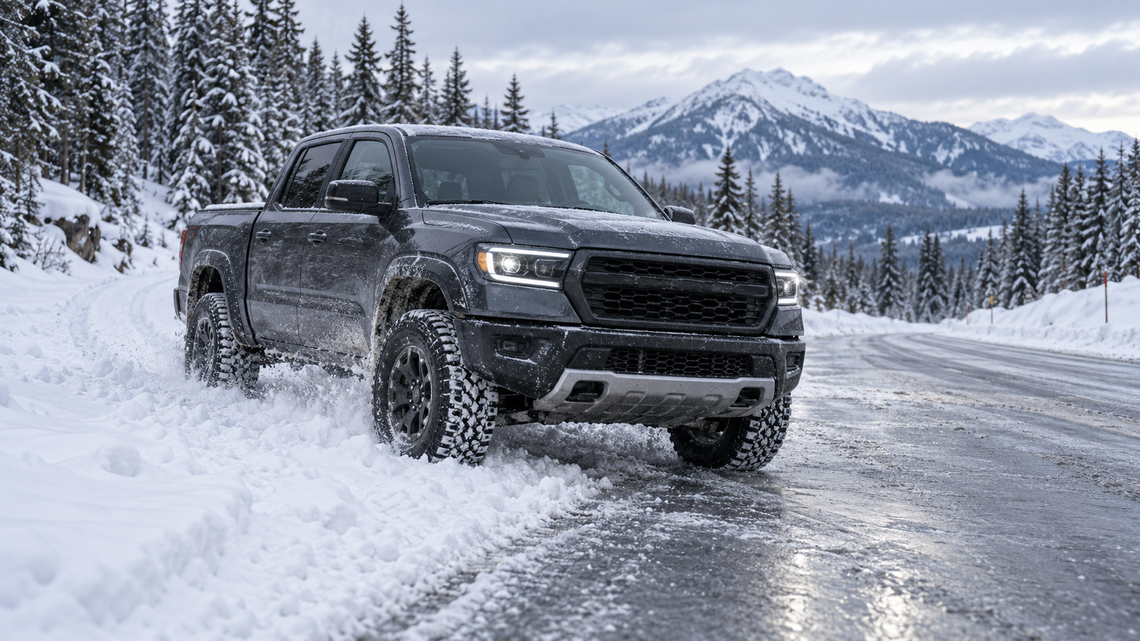
Deep, fresh snow: this is where an aggressive AT tread can actually compete well, sometimes outperforming a winter tire in unplowed conditions thanks to its more open, self-clearing tread pattern.
Extreme cold flexibility: winter-specific compounds are formulated to stay pliable at temperatures well below what an AT compound is designed for, which matters most on cold, dry pavement and black ice.
Noise and wear on cleared roads: AT tires are louder and typically wear faster on plowed highways and city streets than a winter tire built for that exact surface.
Who Should Actually Consider All-Terrain Tires for Winter
A 3PMSF-rated all-terrain tire is a reasonable choice for drivers who genuinely need year-round off-road capability and don't want to run two full tire sets: rural properties, work trucks that see gravel and job sites daily, or vehicles that spend real time off-pavement even in winter months.
For anyone whose winter driving is mostly highways, city streets, and the occasional secondary road, a dedicated winter tire set will out-brake and out-corner even a good 3PMSF all-terrain tire in the conditions that cause most winter collisions: ice and packed snow at intersections and on ramps.
Practical Tips If You're Running All-Terrain Tires Through Winter
Check for the 3PMSF symbol specifically, not just an aggressive tread appearance. A tire that "looks" winter-ready without the pictogram doesn't meet Quebec's legal standard and likely underperforms on ice regardless.
Adjust your driving, not just your tires: larger, stiffer tread blocks mean longer stopping distances even on a certified AT tire, so increase following distance accordingly.
Watch tire pressure closely: cold temperatures drop PSI faster than most drivers expect, and AT tires already run at higher recommended pressures for load capacity, so under-inflation compounds the winter traction loss.
Inspect tread depth before the season starts: an AT tire nearing its wear bars loses even more of its already limited winter capability.
Keep expectations realistic on ice: even a 3PMSF AT tire is not a substitute for slowing down on black ice or an unexpected freezing rain event.
The Bottom Line
All-terrain tires aren't automatically winter tires, no matter how tough the tread looks. The only marking that actually confirms winter performance, and the only one Quebec's law recognizes, is the 3PMSF symbol on the sidewall. If your all-terrain tires carry it, you have a legitimate, legal option that trades some ice and cold-pavement performance for year-round off-road versatility. If they don't, treat winter as the season to either check for a 3PMSF-rated AT replacement or switch to a dedicated winter tire set, especially if most of your driving happens on plowed roads rather than logging trails.