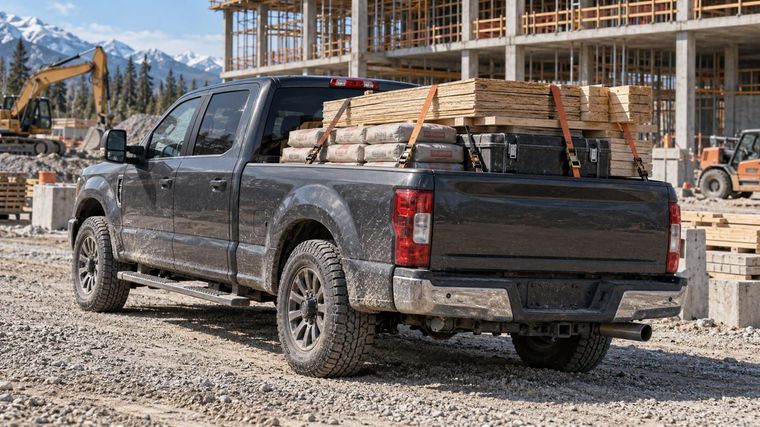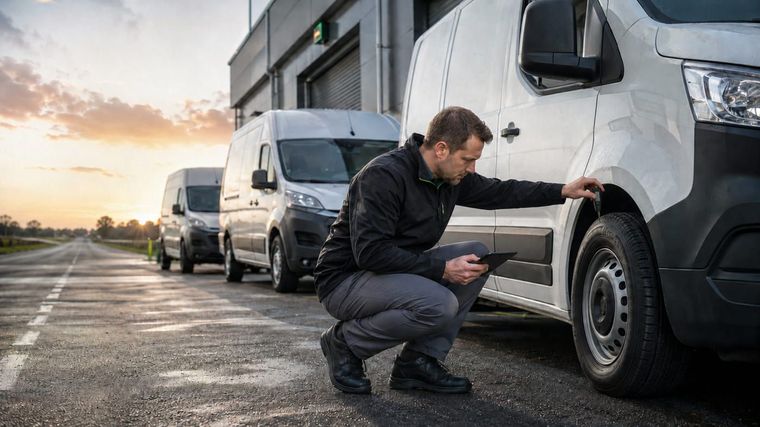

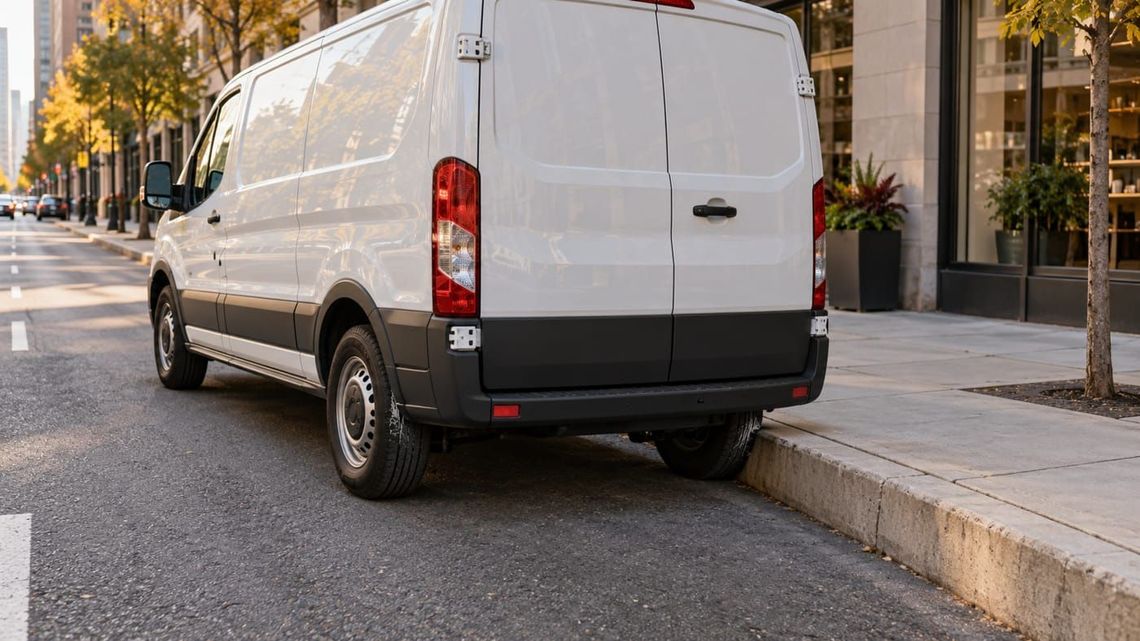
A delivery van's tread can still have half its life left when the tire gets pulled from service. The reason is almost never visible from the top of the tire—it's on the sidewall, where a scrape against a curb during a tight parking maneuver has quietly done damage that no amount of remaining tread depth can fix. For fleets running urban routes, curb damage is one of the most common reasons commercial van tires wear out before their time, and unlike most causes of premature tire failure, it isn't a maintenance problem. It's a byproduct of the job itself—stop-and-go delivery, tight parking, narrow streets—that ordinary tires simply weren't built to absorb.
Why Sidewalls Take the Hit
A tire's sidewall and its tread are built to do completely different jobs. The tread is engineered to wear down gradually and predictably, with rubber compounds and groove patterns designed specifically to handle friction against the road. The sidewall isn't built for that kind of contact at all—its job is to flex, support the vehicle's weight, and hold air pressure, not to absorb repeated scraping against a hard, unforgiving edge.
When a tire's sidewall meets a curb, even at low parking speeds, the impact and the scraping motion stress a part of the tire that was never engineered to take that kind of abuse. A single hard strike can be enough to damage the internal cords that give the sidewall its structural integrity, and repeated light scuffing over months of tight urban parking has a cumulative effect that eventually reaches the same point.
Why It's Different From Every Other Kind of Tire Wear
Most tire wear is visible, gradual, and predictable—tread depth drops steadily and an inspection catches it well before it becomes a safety issue. Curb damage doesn't follow that pattern. The outer rubber can look intact while the internal structure underneath is already compromised, which is exactly why sidewall damage is considered one of the more dangerous forms of tire wear: the tire still holds air and appears driveable right up until it doesn't.
It's also, in the vast majority of cases, unrepairable. Industry standards prohibit patching sidewall damage because the sidewall flexes continuously through every rotation of the wheel, and a repair simply can't hold up to that kind of ongoing stress the way a tread puncture repair can. Once the sidewall is compromised, the tire needs to be replaced outright—not rotated to a less critical position, not monitored for a few more weeks. That's what makes curb damage so costly for a fleet: it doesn't offer the gradual warning that tread wear does, and there's no partial fix once it happens.
Why Urban Delivery Routes Are Especially Exposed
This isn't a rare event for a vehicle running city delivery routes—it's a routine occupational hazard of the job. Every parallel park on a narrow street, every tight turn into a loading zone, every squeeze past a curb cut carries some risk of sidewall contact. A route that includes dozens of stops a day, many of them in tight urban spaces, multiplies that exposure far beyond what a personal vehicle making occasional trips into the city ever encounters.
For a fleet, that means the vehicles doing the most economically important work—last-mile delivery, service calls in dense urban cores—are also the vehicles most exposed to the type of damage that pulls tires from service early. A standard commercial tire without any specific sidewall reinforcement is absorbing that risk with a sidewall built for normal flex and load-bearing, not repeated abrasive contact.
How Sidewall Reinforcement Technology Addresses This
Tire manufacturers have responded to this specific failure mode with reinforced sidewall technology built directly into commercial van and light-truck tires. Michelin's approach, found on tires like the Agilis CrossClimate 2, uses raised, keystone-shaped protectors built into the sidewall—adding significantly more rubber in the exact zone that takes the impact during a curb strike or scrub, without changing the tire's overall size or fitment.
The value of this kind of reinforcement isn't cosmetic. It's aimed directly at extending real-world service life in the specific conditions urban delivery vehicles face every single day—absorbing the scraping and impact that would otherwise compromise an unreinforced sidewall, so the tire can actually reach the tread life it's rated for instead of getting pulled early for damage that has nothing to do with tread wear.
What Fleets Can Do Beyond Tire Choice
Specify sidewall protection when ordering for urban routes. If a vehicle's route profile includes frequent tight parking and urban curb cuts, a tire with reinforced sidewall technology is a direct match for the specific risk that route creates—this is a case where the right spec measurably changes outcomes, not a marginal upgrade.
Train drivers on the real cost of a curb strike. A scrape that looks cosmetic to a driver focused on making the next stop on time can be a tire that needs replacing. Making that connection explicit—this specific kind of contact means a full tire, not a touch-up—helps drivers understand why the extra few seconds of care pulling into a tight spot matters.
Inspect sidewalls specifically, not just tread depth. A pre-trip or post-trip inspection that only checks tread depth will miss sidewall damage entirely. Add a visual sidewall check to the inspection routine for any vehicle running regular urban routes, looking specifically for scuffs, cuts, or any sign of bulging.
Don't wait for a bulge to replace a scraped sidewall. Cosmetic-looking curb scuffs can hide cord damage underneath. When there's any doubt about whether sidewall contact has compromised the tire's structure, the safer and ultimately cheaper call is replacement, not a wait-and-see approach on a commercial vehicle carrying a load.
The Bottom Line
Curb damage isn't a driver error to eliminate through better training alone—it's a structural reality of urban delivery work that ordinary tire construction wasn't built to withstand. For fleets running city routes, treating sidewall reinforcement as a standard spec rather than an optional upgrade addresses the actual failure mode those vehicles face most often, rather than just reacting to it one damaged tire at a time. Blackcircles.ca's fleet team can recommend tires with reinforced sidewall protection matched to your specific routes and vehicles.