
A letter stamped on a tire's sidewall doesn't look like it should matter much. On a commercial vehicle, it's one of the most consequential specs on the whole tire. Load Range—sometimes still called ply rating—tells you how much weight a tire is built to carry and at what air pressure, and getting it wrong in either direction costs money: too low, and you risk tire failure under load; too high, and you're paying for capacity you don't need while riding on a stiffer, less comfortable tire. Here's what Load Range C, D, and E actually mean, and how to land on the right one.
What Load Range Actually Measures
Load Range is a letter code—B, C, D, E, F, and beyond—that tells you a tire's construction strength and the maximum air pressure it's rated to hold. The term comes from the old "ply rating" system, when tires were literally built from stacked layers of cotton cord. Modern tires use steel belts and polyester rather than physical stacked plies, but the letter system stuck around as a strength equivalency:
Load Range B ≈ 4-ply rating, roughly 35 psi max
Load Range C ≈ 6-ply rating, roughly 50 psi max
Load Range D ≈ 8-ply rating, roughly 65 psi max
Load Range E ≈ 10-ply rating, roughly 80 psi max
Higher letters mean a stronger casing that can hold more air, and more air pressure is what lets a tire carry more weight. That's the whole mechanism: Load Range doesn't make a tire stronger on its own, it describes how much pressure the tire's construction can safely handle, which in turn determines its maximum load.
Load Range is different from Load Index, the two- or three-digit number that appears elsewhere in a tire's size code (for example, the "121" in LT265/70R17 121S). Load Index gives the exact weight in kilograms or pounds a specific tire can carry at its rated pressure. Load Range tells you the category of construction; Load Index tells you the precise number for that exact tire. You need both to fully specify a tire, but Load Range is the faster filter when you're narrowing down options for a commercial vehicle.
Why This Matters More on Commercial Vehicles
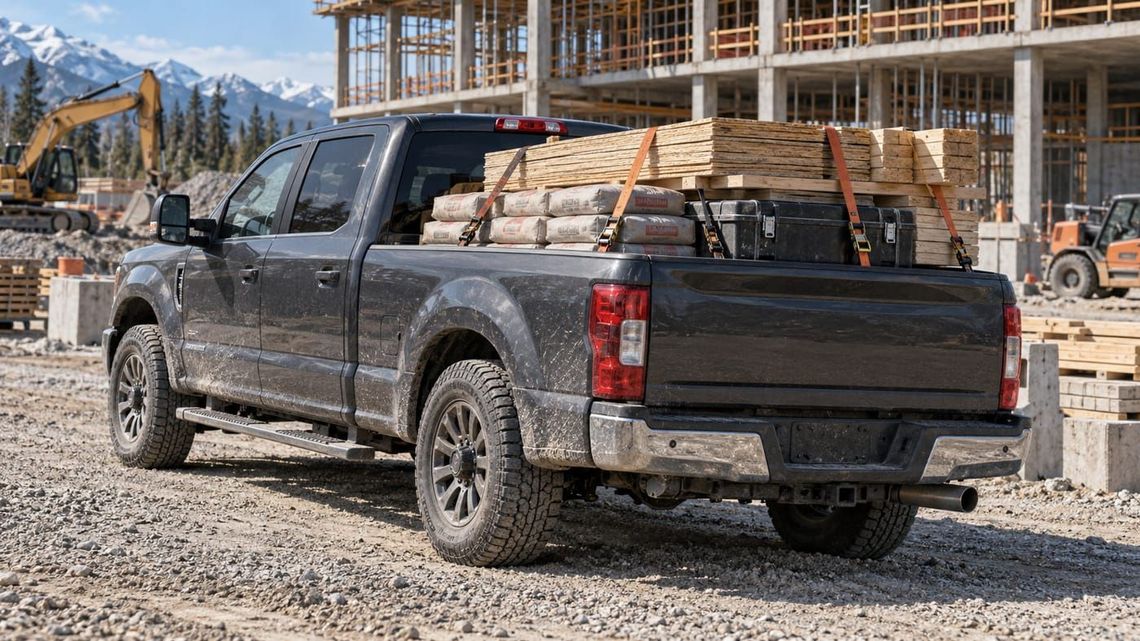
A passenger car almost never needs to think about Load Range—standard passenger tires are built for a fairly narrow, predictable weight range and rarely carry meaningfully different loads from one day to the next. A commercial van or light truck is a different story entirely. It might run empty on one trip and near its maximum payload on the next, and the tire has to handle both without excessive wear on the light days or dangerous overload on the heavy ones.
Running a Load Range too low for the vehicle's actual working weight puts real stress on the tire's casing every time it's loaded near capacity: excessive heat buildup, faster wear, and in the worst case, a blowout under load—which is a far more dangerous failure mode than a blowout on an empty vehicle. Running a Load Range higher than necessary isn't dangerous, but it comes with a real cost: a stiffer ride, reduced comfort, and no benefit if the vehicle never actually carries the weight the tire is built for.
How to Find the Right Load Range for Your Vehicle
Start with the manufacturer's spec, not a guess. Every vehicle has a tire and loading information placard, usually on the driver's door jamb, that specifies the tire size and load range the manufacturer engineered the vehicle around. This is the starting point, not a suggestion—it reflects the vehicle's actual gross axle weight rating (GAWR) and how the manufacturer expects that weight to be distributed.
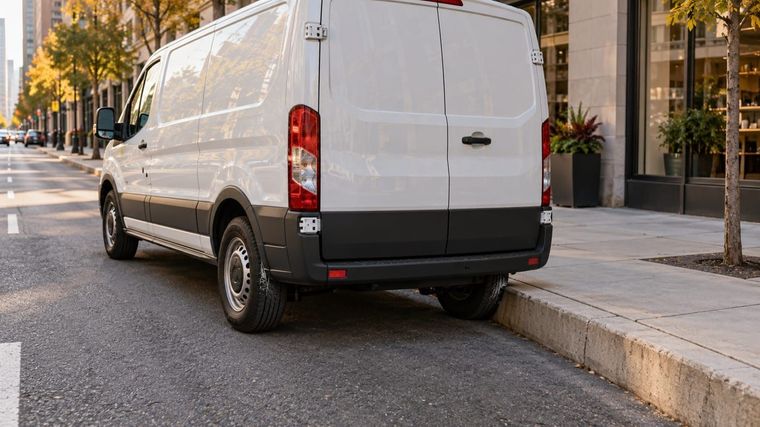
Match load range to how the vehicle is actually used, not how it's used on an average day. If a cargo van is speced from the factory with Load Range C tires but the business regularly loads it close to its maximum payload, it's worth confirming with the tire manufacturer or a commercial tire specialist whether stepping up to Load Range D or E makes sense for that specific use pattern—especially if the factory spec assumed lighter, more occasional loads than what the vehicle actually carries day to day.
Don't mix load ranges across an axle or a vehicle. Different load ranges usually mean different constructions and different recommended pressures, even within the same tire size. Mismatched load ranges on the same axle create uneven load distribution and uneven wear, and can compromise handling.
When upgrading, go up, not down. If a vehicle's use has changed—heavier equipment, more frequent full loads, a new route with more stops and starts—it's reasonable to move up a load range to build in some margin. Moving down from what the manufacturer specified is not a place to cut costs; it directly reduces the safety margin the vehicle was designed around.
Check inflation pressure alongside load range. A tire only reaches its rated load capacity at its specified maximum cold inflation pressure. A Load Range E tire underinflated to Load Range C pressure doesn't carry Load Range E weight—it's operating below its design capacity regardless of what's stamped on the sidewall. Pressure and load range work together; neither one alone tells the whole story.
A Quick Reference
| Load Range | Ply Equivalent | Typical Max Pressure | Common Application |
|---|---|---|---|
| C | 6-ply | ~50 psi | Light-duty vans, smaller commercial trucks with lighter, consistent loads |
| D | 8-ply | ~65 psi | Mid-weight commercial vans and trucks with moderate to heavy loads |
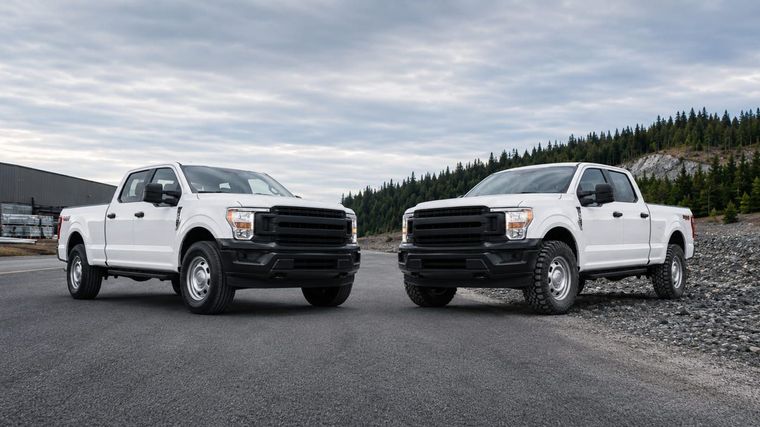
| E | 10-ply | ~80 psi | Heavier vans, ¾-ton and larger trucks, frequent full-payload operation |
These are reference points, not a substitute for checking the actual load index and manufacturer specification for your specific vehicle and tire size — the exact maximum load in kilograms varies by tire size even within the same Load Range letter.
The Bottom Line
Load Range isn't a spec to skim past on a tire quote—it's the number that determines whether a tire can actually do the job your vehicle needs it to do. Start with what the vehicle's placard specifies, be honest about how the vehicle is actually loaded day to day, and don't guess when in doubt. Blackcircles.ca's fleet team can confirm the correct load range and load index for your exact vehicle and use case before you order.