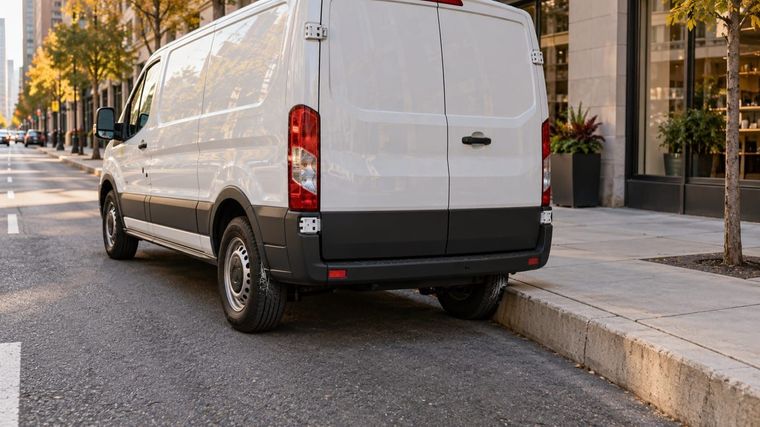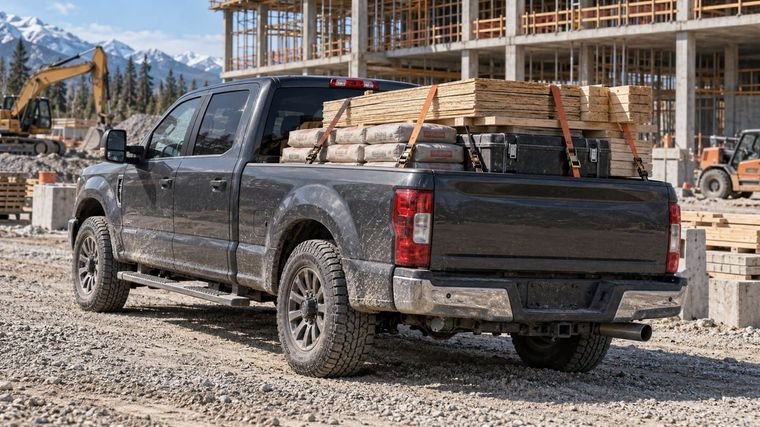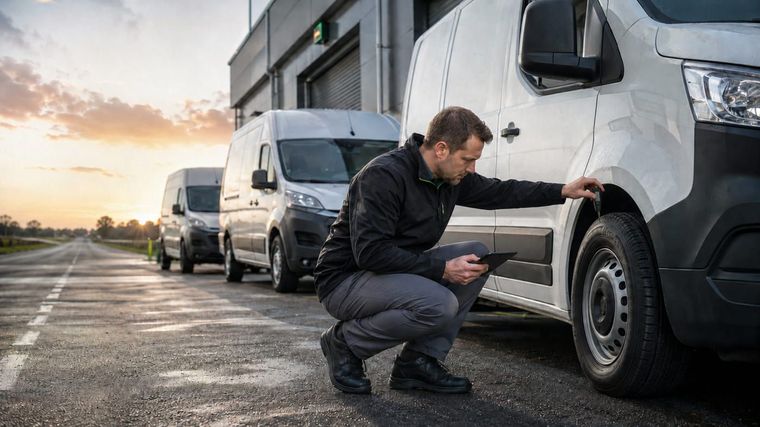

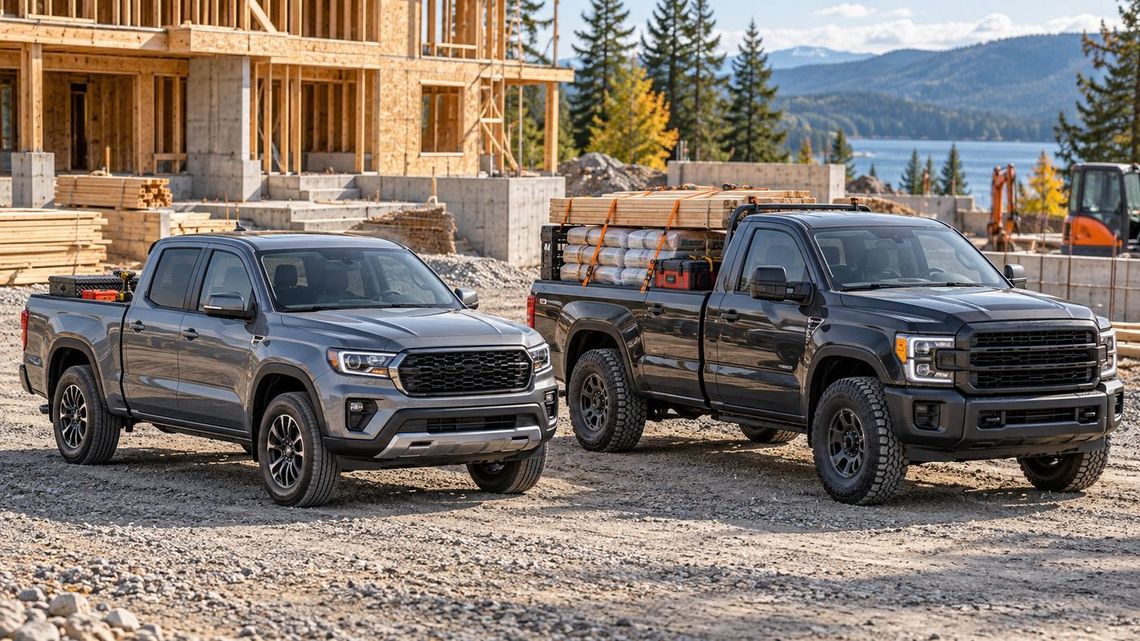
Your half-ton pickup came from the factory on passenger tires. Your neighbour's three-quarter-ton runs on LT tires. Both trucks look alike from the curb, and both get loaded with tools, lumber and equipment every morning. So which tire actually belongs on a work vehicle?
The answer depends on two things: what your vehicle's manufacturer specified, and how hard the vehicle really works. This guide explains how LT and P-metric tires differ, when each one makes sense on a work truck or van, how to handle the pressure change if you switch, and how to compare costs properly. It applies whether you run a single contractor's pickup in Nova Scotia or a mixed fleet of vans in Alberta.
How to Tell LT and P-Metric Tires Apart
The first characters of the size on the sidewall tell you which family a tire belongs to.
P-metric (e.g., P265/70R17): Designed for passenger vehicles. Many half-ton pickups, SUVs and some vans come with them from the factory. Euro-metric sizes with no letter in front (265/70R17) belong to the same passenger family.
LT-metric (e.g., LT265/70R17): Designed for light trucks that carry or tow heavy loads. Standard on most three-quarter-ton and one-ton pickups and on heavier vans.
C suffix (e.g., 235/65R16C): The European "commercial" designation, common on vans like the Mercedes-Benz Sprinter, Ford Transit and Ram ProMaster. It plays the same role as LT.
LT and C tires also carry a load range. The most common on work vehicles are C, D and E. Each step up allows a higher maximum inflation pressure, and therefore more capacity: about 350 kPa (50 psi) for load range C, 450 kPa (65 psi) for D and 550 kPa (80 psi) for E. For the full breakdown, see our guide to [load ranges C, D and E].
What's Actually Different Inside
Two tires can share the same numbers, 265/70R17 for example, and be built very differently.
Construction. An LT tire uses heavier cords, extra reinforcement under the tread and thicker sidewalls. That's what lets it run at higher pressures and carry heavy loads hour after hour. A P-metric tire uses a lighter casing tuned for comfort, quietness and fuel efficiency.
Tread depth. LT tires usually start with deeper tread than their P-metric equivalents. More rubber means more kilometres before replacement, especially under load.
How load is rated. This is the detail most buyers miss. A standard-load P-metric tire reaches its maximum load capacity at about 240 kPa (35 psi); adding more air doesn't add capacity. And when a P-metric tire is mounted on a light truck, industry load tables reduce its capacity by dividing it by 1.10. A P-metric tire rated for 1,000 kg on a car is really good for about 909 kg on a pickup.
LT tires don't need that adjustment, because they were rated for truck use from the start. Their published load is meant to be carried day in, day out, not just occasionally.
Ride and handling. The stiffer LT casing reduces sway with a loaded bed or a trailer behind you. The trade-off is a firmer, sometimes noisier ride when the vehicle is empty.
Start With the Placard
Before comparing tires, open the driver's door and read the tire and loading information placard on the door jamb. It lists the original size, the tire type and the recommended cold inflation pressure.
That placard settles the most important question:
If it specifies LT or C tires, stay with LT or C tires. Replacing them with P-metric tires reduces load capacity, and on a vehicle with dual rear wheels it isn't an option at all. Our article on [why LT-metric and passenger tires aren't interchangeable] covers the risks in detail.
If it specifies P-metric tires, you have a real choice. You can stay with P-metric or move up to LT. The rest of this guide is about making that choice well.
Always go by the placard, not by the tires currently on the vehicle. A previous owner or shop may have installed something different.
When P-Metric Tires Are the Right Call
P-metric tires are a sound choice on a vehicle that came with them, as long as the work matches what the manufacturer planned for. That usually means:
Mostly paved roads, highway or city
Light to moderate payloads that rarely approach the vehicle's limit
Occasional towing of a light trailer
Long daily distances where comfort, noise and fuel consumption matter
A sales rep's pickup, a property manager's van or a half-ton used for estimates and light deliveries fits this profile. In these cases, LT tires would add cost, weight and a harsher ride without giving much back.
When LT Tires Are the Better Choice
Moving from P-metric to LT makes sense when the vehicle works harder than a typical passenger-tire duty cycle. Consider LT tires if:
The bed or cargo area is loaded most days. Tools, compressors, shelving and materials add up fast, and they stay in the vehicle.
You tow regularly. Stiffer sidewalls reduce trailer sway and give steadier steering.
You drive on gravel, job sites or rural roads. Sharp stones, rebar and construction debris are much harder on a P-metric casing. LT tires resist punctures and sidewall cuts better.
Downtime is expensive. For a contractor, a flat at 7 a.m. means a crew waiting and a job running late. Fewer failures can be worth more than a smoother ride.
Your roads take a beating every spring. Frost heaves and potholes are tough on light casings, whether you work in northern Ontario, the Prairies or the Maritimes.
Switching From P to LT: Get the Pressure Right
This is where most mistakes happen. When you install LT tires on a vehicle that came with P-metric tires, the pressure on the placard no longer applies directly.
At the same pressure, an LT tire can carry less load than the P-metric tire it replaces. LT tires need more air to deliver their capacity. Running them at a placard pressure written for passenger tires can leave them underinflated for the load, which builds heat and wears them out early.
The correct method uses the tire manufacturer's load and inflation tables:
Find the load the original P-metric tire carried at the placard pressure, after the 1.10 light-truck adjustment.
Look up the pressure at which the new LT tire carries at least that load.
Use that pressure as your minimum, then adjust upward for heavy loads or towing, within the tire's limits.
Don't simply inflate to the maximum pressure moulded on the sidewall either. That number is a limit, not a setting. An overinflated LT tire on a lightly loaded truck rides harshly and wears out the centre of the tread.
One more detail: the higher pressure may require an adjustment to your tire pressure monitoring system (TPMS). A tire shop can confirm and reset it.
Comparing the Real Cost
LT tires cost more to buy. They're heavier and usually stiffer, so fuel consumption can rise slightly. On paper, P-metric tires look cheaper.
The fair comparison is cost per kilometre, not purchase price. A tire that lasts longer and avoids roadside failures can end up cheaper over its life, even at a higher price. Include in your calculation:
Purchase and installation price
Expected lifespan in kilometres for your type of use
Fuel impact
Cost of downtime: idle crews, missed jobs, towing
Our cost-per-kilometre tire calculator lets you compare both options with your own numbers.
Check the warranty too. Treadwear warranties often differ between passenger and LT tires, and some are reduced or excluded for commercial use. Read the terms before you buy, not after.
Mistakes to Avoid
Putting P-metric tires on a vehicle that specifies LT or C tires
Inflating new LT tires to the old passenger-tire placard pressure
Treating the maximum sidewall pressure as the everyday pressure
Mixing LT and P-metric tires on the same vehicle
Choosing on price alone without considering payload, roads and downtime
A note on winter: choosing LT or P doesn't affect winter tire compliance. Where your province has winter tire rules, what counts is the three-peak mountain snowflake symbol, and it's available on both LT and P-metric winter tires.
Quick Decision Guide
Placard says LT or C: buy LT or C tires.
Placard says P, light work on pavement: P-metric tires are a good fit.
Placard says P, heavy daily loads, towing or rough roads: consider LT, and set the pressure from the load tables.
Not sure how heavy your truck really is: weigh it fully loaded at a public scale before you decide.
Frequently Asked Questions
Can I put LT tires on a half-ton pickup? Yes, as long as the size fits and the pressure is set from the load tables so the new tire carries at least the original load. Expect a firmer ride.
Do LT tires last longer? Under heavy use, usually yes, thanks to deeper tread and stronger construction. Under light use, the gap narrows.
Will LT tires increase fuel consumption? Slightly, in most cases, because of their extra weight and stiffness. On a vehicle that works hard, the added durability often outweighs it.
Are C tires the same as LT tires? They do the same job under a different sizing standard. On a van that specifies C tires, replace them with C tires of the same or higher load index, never with passenger tires.
Conclusion
Choosing between LT and P-metric tires for a work truck comes down to the placard and the job. If your vehicle specifies LT or C tires, the decision is already made. If it came on P-metric tires, look honestly at your loads, your roads and what a flat really costs you. Light work on pavement favours the comfort and economy of P-metric tires. Heavy, daily, rough work favours the durability of LT tires, provided the pressure is set correctly.
Not sure which fits your vehicle? Browse LT and commercial tires by size on Blackcircles.ca, or contact our team to confirm the right load range and pressure for your truck or fleet before you order.