
Pirelli's newcomer takes on Michelin's new generation. Here's how these two studless winter tires really compare on ice, snow, wet roads and over the long haul.
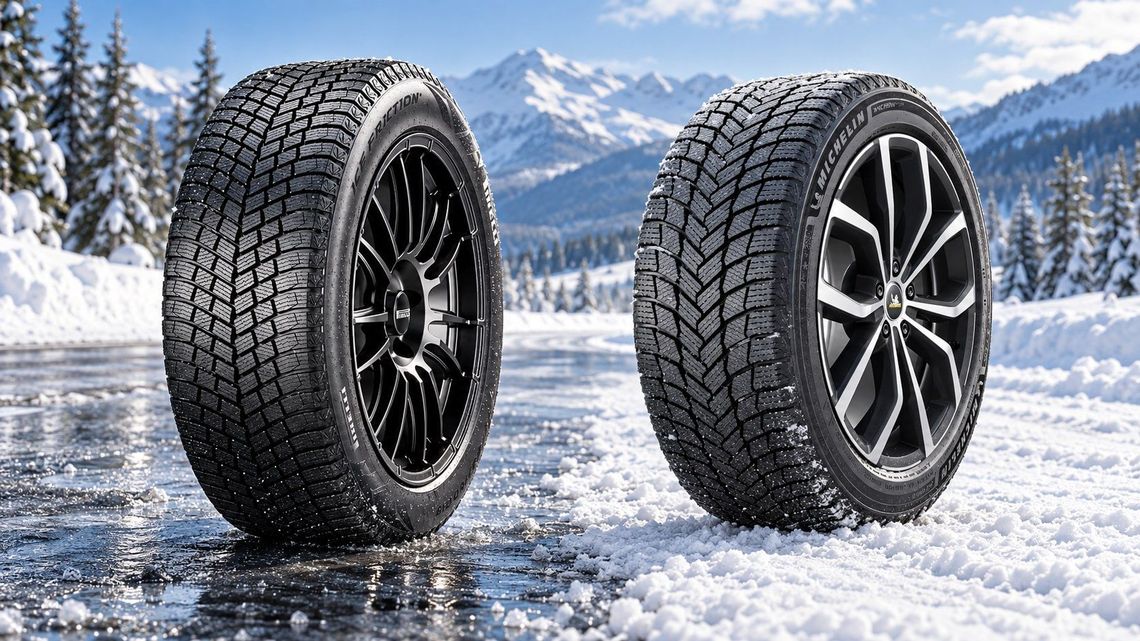
Picking a winter tire is rarely about the spec sheet. It's about how your vehicle reacts the morning last night's freezing rain has glazed the road, or when a storm leaves 15 cm of packed snow on your street. This season, two models keep showing up in head-to-head comparisons: the Pirelli Ice Friction, successor to the Ice Zero FR, and the Michelin X-Ice Snow+, Michelin's brand-new premium winter tire.
Both target the same segment: premium studless winter tires for cars, crossovers and SUVs. Their philosophies differ, though, and those differences show up depending on where you drive and what you drive.
A quick look at the two contenders
The Ice Friction is an all-new tire. Pirelli introduced it to Canadian media in early 2025 at the ICAR circuit in Mirabel, with a clear goal: give up nothing in one winter attribute to gain in another. The tread pattern, compound and construction were all redesigned, with a strong focus on electric vehicles. At launch, nearly half the sizes carried the ELECT marking, reserved for versions built for EVs and plug-in hybrids.
The X-Ice Snow+ reached retailers starting in May 2026 for the 2026-2027 winter. Michelin kept a proven V-shaped tread and focused its work on an all-new compound, with three goals: better braking on every surface, longer tread life and improved energy efficiency. It's rolling out in two phases: roughly 80 sizes first, with about 65 more planned for 2027.
Key takeaway: the Ice Friction is a ground-up redesign with a strong EV focus, while the X-Ice Snow+ bets on balanced braking and warranty-backed longevity. Because the X-Ice Snow+ is so new, no independent test compares the two directly yet. The data below comes from the manufacturers and from separate tests of each tire.
The technology under the tread
Pirelli: a dual-layer compound and "nanomagnets"
The heart of the Ice Friction is its two-layer tread compound. The top layer, the one touching the road, is formulated for grip on ice, wet pavement and in deep cold. The stiffer bottom layer changes depending on whether the tire is built for a gas or electric vehicle. Its job is to cut energy loss and lower rolling resistance. Pirelli estimates this approach can add 5 to 8% of range to an EV.
The compound uses a plant-based oil plasticizer that keeps the rubber flexible across a wide temperature range. Pirelli also adds what it calls nanomagnets, which adjust the compound's behaviour to the ambient temperature. The logic is simple: a winter tire that hardens at -25°C loses its bite, and one that's too soft at 2°C on wet pavement feels vague.
The tread itself is a directional V pattern with wide grooves and a central channel to clear water and slush quickly. The sipes trap snow to create snow-on-snow contact, which improves traction. Hidden three-dimensional sipes below the surface open up as the tire wears. According to Pirelli, the Ice Friction retains 83% of its original performance when it reaches the wear indicator.
Michelin: the Flex-Ice 3.0 compound and MaxTouch
The X-Ice Snow+ introduces the Flex-Ice 3.0 compound, made with silica and carbon black. Michelin keeps the recipe under wraps but confirms a new elastomer, a new oil and a reworked silica filler. The goal mirrors Pirelli's: keep the rubber pliable in deep cold without giving up tread life or rolling resistance.
MaxTouch technology maximizes the contact patch and spreads acceleration, braking and cornering forces evenly, which promotes even wear. The V-shaped tread uses full-depth sipes, and Piano Acoustic Tuning varies tread block sizes and angles to reduce road noise.
Ice performance
Both tires carry the Three-Peak Mountain Snowflake (3PMSF) symbol and the Ice Grip symbol, a newer certification based on the ISO 19447 standard that specifically measures braking on ice. Neither can claim that advantage on its own.
The Ice Friction already has several independent tests behind it. It placed 2nd of 8 in Vi Bilägare's 2025 winter tire test and 2nd of 7 among Nordic studless tires in Teknikens Värld's test the same year. In 2026, Teknikens Värld ranked it 3rd of 5, noting ice grip and stability slightly behind the leaders. In a Pirelli-commissioned UTAC test, it out-braked the Continental VikingContact 7 and Nokian Hakkapeliitta R5 on ice, with only the Goodyear UltraGrip Ice 3 doing better.
For the X-Ice Snow+, Michelin calls it its best winter tire for braking on ice, snow, wet and dry roads, with strong lateral grip on ice. In early 2026 testing in Quebec's Laurentians, Vicarious magazine found it more convincing than the Continental VikingContact 8 and Nokian Hakkapeliitta RS EV, with shorter braking zones and a progressive breakaway. That testing took place at a Michelin-run event, though, and large-scale independent tests are still to come.
Bottom line: both tires share the same certifications and post strong ice results, but no verified data yet shows that one stops shorter than the other.
Snow performance
On snow, both tires rely on a V-shaped tread that bites into snow and clears it between the blocks. That second part is often overlooked: a tire whose grooves pack up with snow loses effectiveness fast, no matter how good its sipes are.
The Ice Friction posted the best snow traction time in Vi Bilägare's 2025 test, and Teknikens Värld praised its snow handling in 2026. At the Mirabel press event, though, some journalists found its behaviour varied by vehicle: one tester was disappointed by an Audi Q5, while front-wheel-drive cars impressed.
The X-Ice Snow+ stood out in deep snow during Vicarious's testing, with stronger forward bite and better tread self-cleaning than the Continental VikingContact 8. Michelin also claims improved snow braking over its previous generation.
Cold, wet roads
A large part of the Canadian winter happens on neither ice nor snow, but on wet pavement hovering around freezing. That's daily life on the BC coast, in the Atlantic provinces and across southern Ontario, where freeze-thaw cycles never seem to end.
Pirelli makes wet roads a central selling point. In its UTAC test, the Ice Friction stopped shorter on wet pavement than every competitor tested, including the Continental VikingContact 7, Goodyear UltraGrip Ice 3 and Nokian Hakkapeliitta R5. Its directional tread and networked grooves are clearly designed to move water fast.
Michelin also includes wet and dry roads in the braking gains it claims for the X-Ice Snow+, but hasn't published comparative figures against the Ice Friction. If your winters are more often grey and soaked than white, keep an eye on this as independent X-Ice Snow+ tests come out.
Comfort, noise and tread life
On comfort, both tires prioritize a quiet ride. ELECT versions of the Ice Friction include the Pirelli Noise Cancelling System (PNCS), a sound-absorbing foam bonded inside the tire that Pirelli says cuts cabin noise in half. That's a real advantage in an EV, where the lack of engine noise makes road noise much more noticeable. The X-Ice Snow+ relies on Piano Acoustic Tuning, which keeps noise low whether the tire is new or worn.
Tread life is where Michelin pulls clearly ahead. In Canada, the X-Ice Snow+ is backed by a 70,000 km limited treadwear warranty, a 60-day satisfaction guarantee and roadside assistance. Michelin also claims it lasts more than 33% longer than three leading competitors, or at least two extra winters, with more than 7% better energy efficiency.
Pirelli focuses instead on performance retention as the tire wears (83% at the wear indicator) rather than guaranteed mileage. Pirelli winter tires are covered by the standard limited warranty against manufacturing defects. Before you buy, check the manufacturer warranty page for exact terms. On Blackcircles.ca, both models also come with free two-year road hazard protection.
Pirelli Ice Friction vs Michelin X-Ice Snow+
| Criteria | Pirelli Ice Friction | Michelin X-Ice Snow+ |
|---|---|---|
| Tread compound | Dual layer, plant-based oil, nanomagnets | Silica-based Flex-Ice 3.0, MaxTouch |
| Winter certifications | 3PMSF + Ice Grip | 3PMSF + Ice Grip |
| Tread pattern | Directional V, 3D sipes revealed with wear | V pattern, full-depth sipes |
| Main selling point | Ice and wet braking | Longevity and balanced braking on all surfaces |
| Electric vehicles | ELECT versions with PNCS foam | EV and hybrid compatible, no dedicated version |
| Treadwear warranty | None announced | 70,000 km |
| Sizes | 15 to 20 inches | 15 to 23 inches, two-phase rollout |
| Market track record | Second winter, several independent tests | First winter, independent tests to come |
| Best for | EV owners, wet winters around 0°C | High-mileage drivers who want long tread life and consistency |
Which tire fits your driving?
The Pirelli Ice Friction makes a lot of sense if you drive an electric vehicle or plug-in hybrid: ELECT versions are built for the weight and instant torque of these vehicles, and the PNCS foam makes an audible difference. It also suits drivers whose winters are mostly wet pavement, slush and black ice, whether that's in Vancouver, Halifax or Toronto. And after a full season on the market, its independent test results are already on record.
The Michelin X-Ice Snow+ is a better match for high-mileage drivers who want to spread their investment over several winters, with a 70,000 km warranty to back it up. Its wider size range, up to 23 inches, also makes it the easier option for large SUVs and pickups. Keep in mind it's entering its first winter: independent tests will sharpen the picture over the coming months.
Either way, you're covered for provincial requirements: both tires carry the 3PMSF symbol, which meets Quebec's mandatory winter tire period from December 1 to March 15, the requirements on designated BC highways from October 1 to March 31, and the criteria Ontario insurers use for winter tire discounts. Always start with your vehicle's size, load index and speed rating, then choose based on how and where you actually drive rather than on brand reputation.