

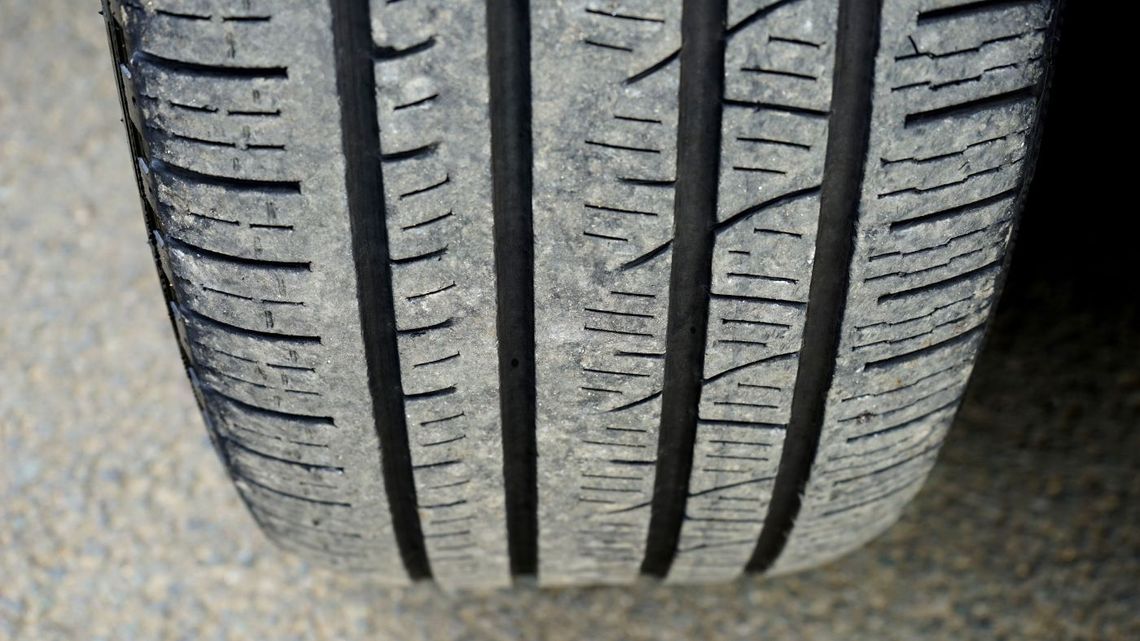
When we talk about automotive pollution, we often focus on the exhaust pipe. However, even an electric vehicle leaves something behind. That’s right: tiny pieces of its tires. Tire pollution is practically invisible, but it is now attracting more and more attention from scientists. In fact, Canada is currently conducting research to determine where these particles end up and what effects they may have.
This obviously does not mean that our tires have suddenly become terrible. They wear down because they create the friction needed to accelerate, turn and stop. Still, that wear deserves our attention.
Where Does Tire Pollution Come From?
As a tire rolls, its tread rubs against the pavement and gradually loses material. The resulting particles can remain on the road, become airborne or enter waterways through runoff.
Researchers are particularly interested in 6PPD, a chemical used to protect rubber against ozone and oxidation. Once released into the environment, it can transform into 6PPD-quinone. The name sounds as though it came directly from a particularly cruel chemistry exam, but the substance raises some very real environmental questions.
Why Is Canada Studying the Issue?
Environment and Climate Change Canada is currently analyzing tire-derived chemicals in the air around Toronto and in rural parts of the Great Lakes Basin. The department is seeking to determine where these substances come from, how concentrated they are and how they move through the environment.
Other studies conducted near highways and racetracks in Quebec and Ontario detected tire wear particles in every sample examined. Some were small enough to penetrate deeply into the lungs. Researchers have also detected 6PPD-quinone in Canadian aquatic environments at concentrations that could potentially affect salmon health. Research is still ongoing, particularly regarding the possible risks to human health.
How Can We Reduce Tire Wear?
It is impossible to prevent a tire from wearing down completely, but a few good habits can slow the process. Incorrect pressure, poor alignment or neglected rotations can cause uneven wear and unnecessarily shorten a tire’s lifespan.
Smoother driving also helps. Hard acceleration, late braking and corners taken with a little too much enthusiasm remove more material from the tread. Choosing a durable tire suited to the vehicle and its intended use also makes more sense than automatically searching for the largest or sportiest model.
There is no magical solution to tire pollution just yet. While we wait for the industry’s next advances, properly maintaining our tires remains the simplest measure available: they last longer, cost less over time and leave a little less of themselves on the road...