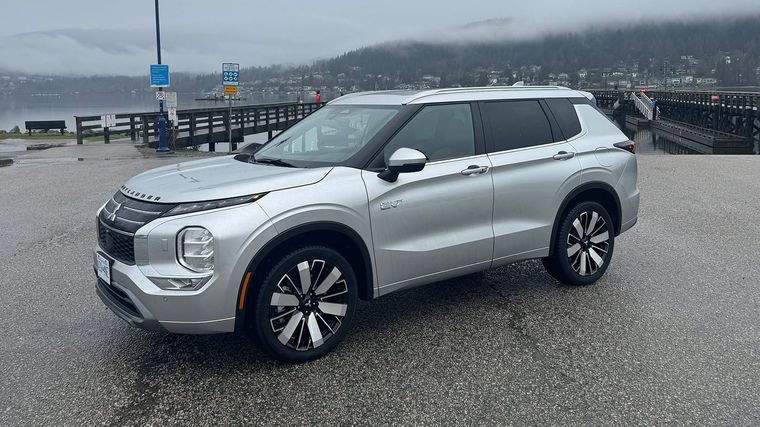

For this road trip in Japan, I rented a Toyota Yaris. This was obviously not a traditional road test involving a brand-new vehicle supplied by the manufacturer. It was simply a small rental car, but one that, I must admit, quickly became an excellent travel companion.
Learning to drive on the other side
Driving on the left was obviously my first challenge. The driving position, intersections and the way the car must be placed within the lane all require some adjustment. During the first few kilometres, every action demands a little more thought than usual. You constantly have to remind yourself that the centre of the road is on the right side of the car rather than the left. On top of that, the turn-signal stalk is also located on the opposite side of the steering wheel. As a result, I repeatedly activated the windshield wipers instead of signalling my turns...
Fortunately, the Yaris is particularly easy to get used to. Its compact dimensions make it easy to judge the space around the vehicle, while its simple controls avoid adding unnecessary difficulty to the experience. Its powertrain is not especially exciting, but it responds smoothly and predictably. In a situation where my brain already had plenty of new information to process, that simplicity was frankly appreciated.
A stop in front of an enormous Buddha
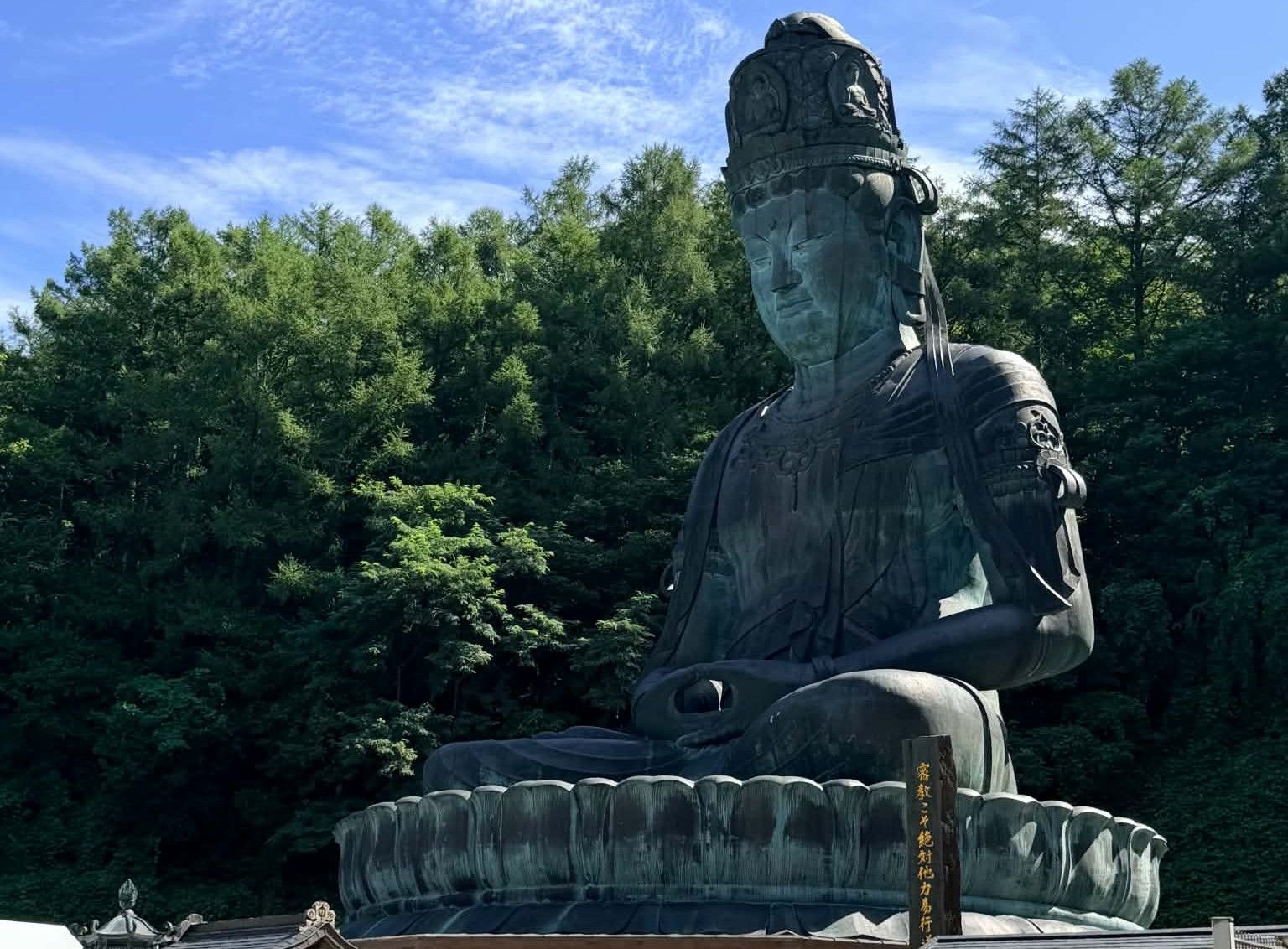
Before truly leaving the Aomori area, we stopped at Seiryū-ji to see the Shōwa Daibutsu. Built in 1984, this bronze statue depicts the Buddha Dainichi Nyorai. At 21.35 metres tall, it is the largest seated bronze Buddha statue in Japan.
The site also features several impressive buildings, including a five-storey pagoda made from local cypress. After the concentration required to adjust to driving in Japan, the peaceful temple arrived at exactly the right moment. We took some time to explore the grounds before returning to the Yaris and continuing toward Oirase.
Avant de véritablement quitter la région d’Aomori, nous nous sommes arrêtés au temple Seiryū-ji pour découvrir le Shōwa Daibutsu. Construite en 1984, cette statue de bronze représente le Bouddha Dainichi Nyorai. Avec une hauteur de 21,35 mètres, il s’agit de la plus grande statue de Bouddha assis en bronze au Japon.
Le site comprend également plusieurs bâtiments impressionnants, dont une pagode à cinq étages construite en cyprès de la région. Après la concentration nécessaire pour s’habituer à la conduite japonaise, le calme du temple arrivait au moment idéal. Nous avons pris le temps de parcourir les lieux avant de retourner vers la Yaris et de reprendre la route en direction d’Oirase.
Putting the Yaris to the test in Oirase Gorge
A beautiful road runs through Oirase Gorge, following the river past rapids and a succession of small waterfalls. The scenery is genuinely spectacular. From behind the wheel, however, it is not always quite as peaceful as it appears in the photos!
The road quickly becomes narrow and winding. There is very little room on either side, and in several places, ditches run directly alongside the pavement. You must also deal with drivers slowing down to admire the scenery and visitors walking near the road.
We were also travelling during Obon, one of Japan’s most important holiday periods. The region was therefore completely packed with visitors. Some parking areas were overflowing, and traffic tightened around the most popular locations. Let’s just say that this was not the ideal moment to find out exactly how wide a large SUV really is.
This is where the Yaris truly began to demonstrate its strengths. Its small footprint allowed me to squeeze through without too much difficulty, while its precise steering made it easy to place through the corners. The car remained stable and predictable despite the road’s constant changes in direction. It was neither powerful nor luxurious, but it was perfectly suited to these conditions.
A well-earned meal at Lake Towada
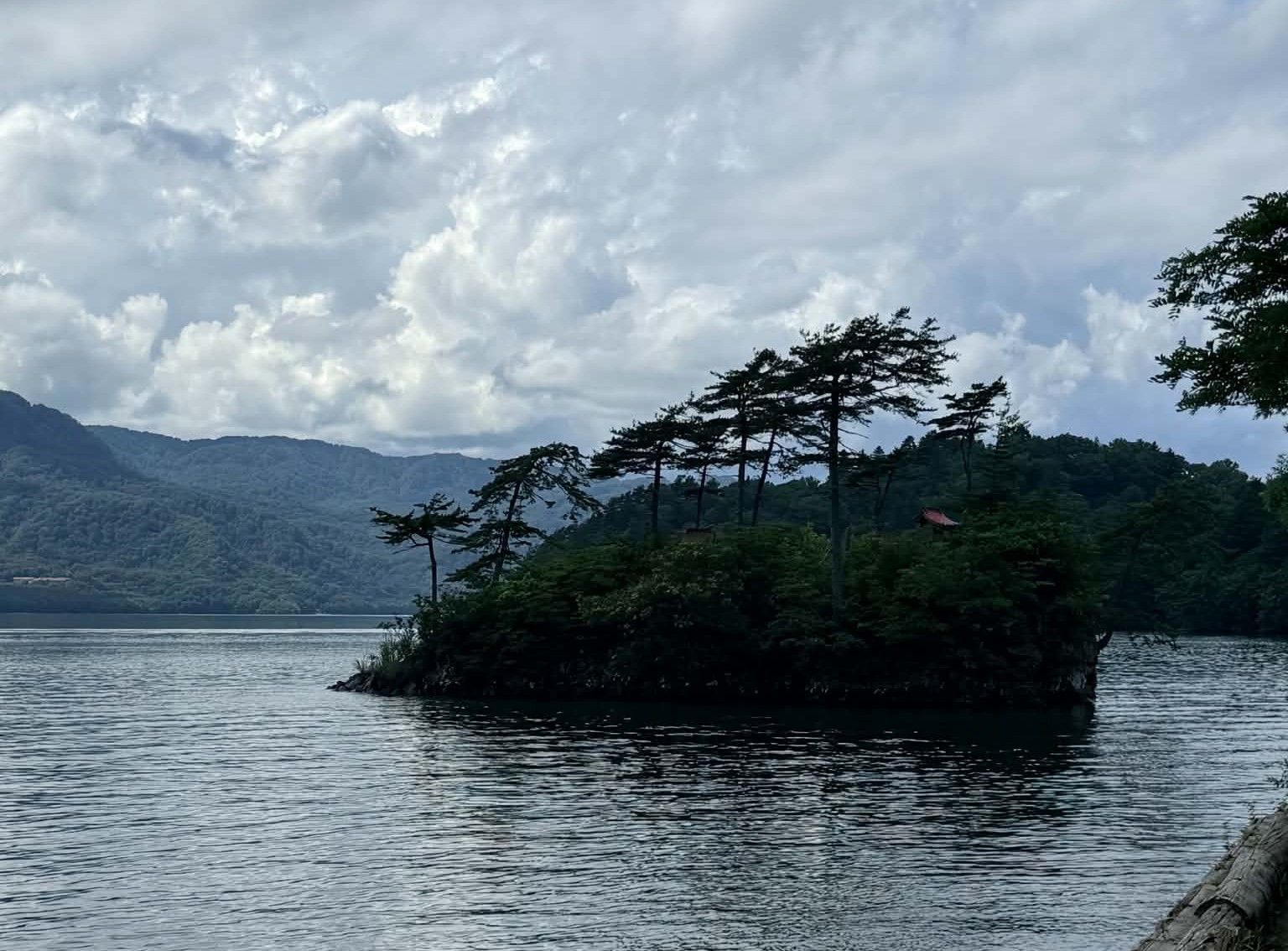
After the narrow roads and crowds of Oirase Gorge, we finally arrived at Lake Towada. The contrast was immediate. In front of us was an immense volcanic lake surrounded by mountains. We parked the Yaris and took a well-earned break.
For lunch, we enjoyed a delicious bowl of soba accompanied by local fish. Lake Towada is particularly known for himemasu, a small freshwater salmon that spends its entire life in the lake. It is difficult to imagine a meal better suited to the setting.
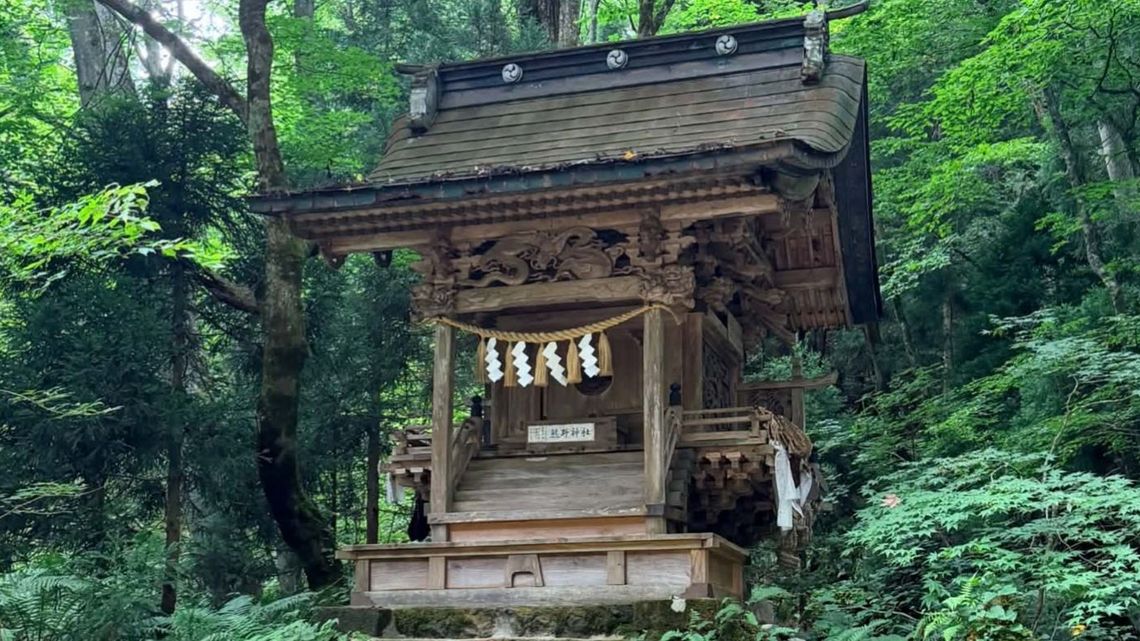
We then walked to Towada Shrine, hidden among the tall cedar trees near the shore. The site was peaceful, shaded and almost mysterious. It was a beautiful way to conclude the first part of our day.
Our journey, however, was far from over. After leaving Lake Towada, we would continue toward the small village of Shingō to discover a slightly stranger destination: the supposed tomb of Jesus. We would then still have to reach the small city of Hachinohe before the end of the day. The Yaris was not finished with us yet!