
Introduction
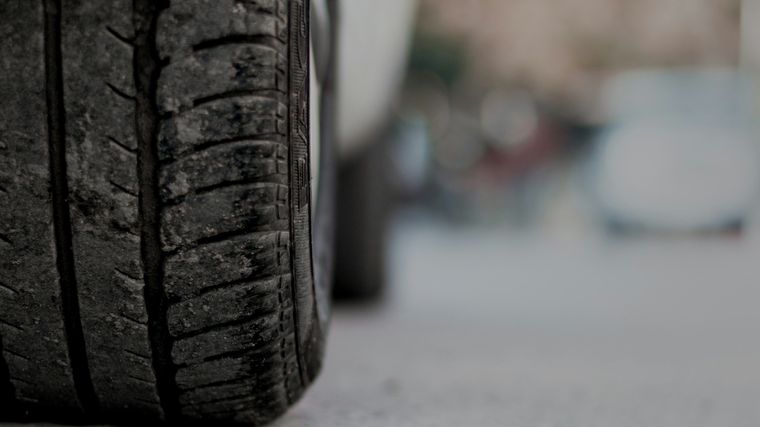
Uneven tire wear is often seen as a simple tire replacement issue. However, it can reveal much more about the overall condition of your vehicle. Your tires are the only point of contact between your car and the road. When they do not wear evenly, it may indicate an issue with wheel alignment, suspension, tire pressure, balancing, or even driving habits.
Understanding what abnormal tire wear means can help you improve safety, extend the life of your tires, and avoid costly repairs.
Why Tire Wear Matters
Tires in good condition provide better traction, shorter braking distances, and more stable handling. On the other hand, tires that wear unevenly can reduce vehicle performance, increase fuel consumption, and compromise your safety, especially in rain, snow, or during emergency braking.
Regularly inspecting your tires allows you to quickly detect signs of a mechanical or maintenance-related problem.
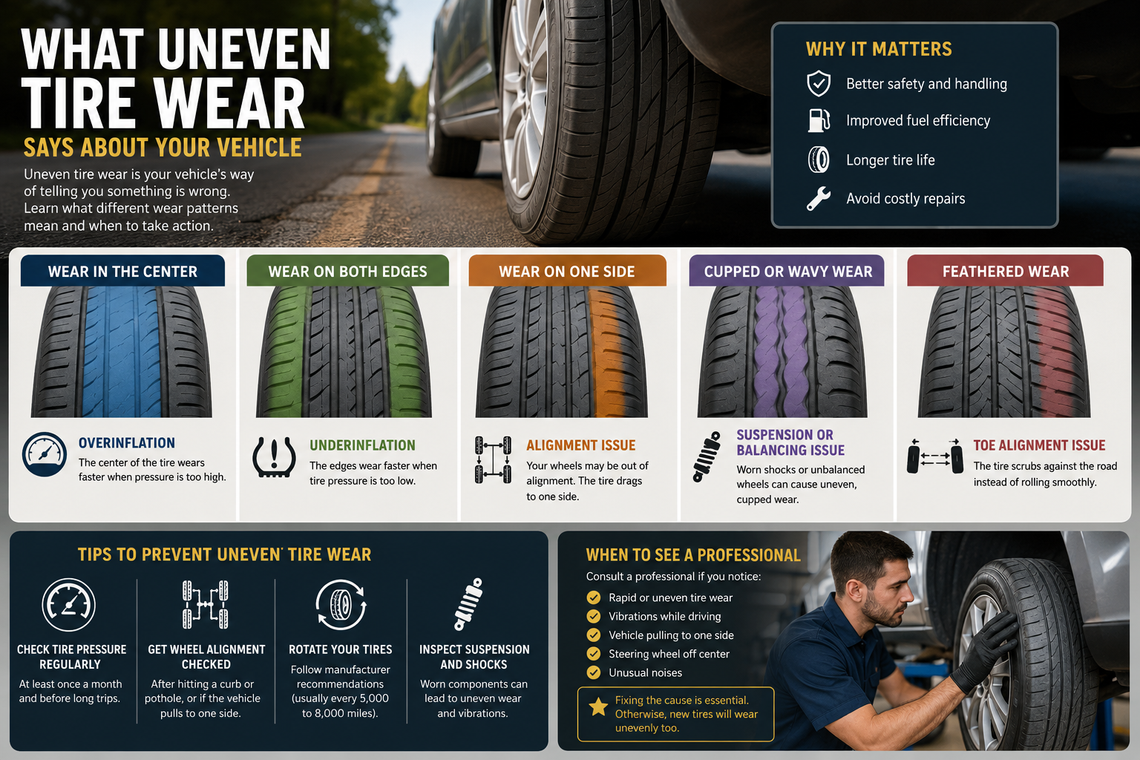
Wear in the Center of the Tire: Overinflation
If the tread is more worn in the center than on the edges, your tires are likely overinflated. Excessive pressure causes the tire to bulge, reducing the contact area with the road. As a result, the center of the tire carries more load and wears out faster.
Overinflation can also reduce ride comfort and decrease traction, particularly on wet roads. To avoid this issue, check your tire pressure at least once a month and follow the recommendations provided by your vehicle manufacturer.
Wear on Both Edges: Underinflation
When both sides of the tire are more worn than the center, this often indicates low tire pressure. An underinflated tire flattens more against the road, increasing friction on the tire shoulders.
This type of wear can lead to tire overheating, higher fuel consumption, and an increased risk of a blowout. Maintaining proper tire pressure is therefore essential, especially before a long trip or during temperature changes.
Wear on One Side: Alignment Problem
More noticeable wear on the inner or outer edge of the tire is often related to poor wheel alignment. When the wheels are not properly aligned, the tires do not roll perfectly straight, which causes rapid wear on one side.
Poor alignment can be caused by hitting a curb, driving through a pothole, a collision, or simply normal wear of suspension components. If your vehicle pulls to one side or if the steering wheel is not centered when driving straight, it is recommended to have the alignment checked.
Cupped or Wavy Wear: Suspension or Balancing Issue
Cupped wear, sometimes called scalloped wear, appears as irregular or wavy patches across the tread. This type of wear may indicate a wheel balancing problem, worn shock absorbers, or damaged suspension components.
When the suspension does not keep the tire firmly in contact with the road, the tire may bounce slightly while driving. This creates uneven wear and can also cause vibrations in the steering wheel or inside the cabin.
Feathered Wear: Toe Alignment Issue
If you run your hand across the tread and feel a sawtooth-like texture, your tires may be showing signs of a toe alignment problem. This type of wear occurs when the tires lightly scrub against the road instead of rolling naturally.
Feathered wear can also create louder road noise, which is sometimes mistaken for a wheel bearing issue. A professional inspection can determine whether a wheel alignment adjustment is needed.
Premature Tire Wear: Driving Habits or Poor Maintenance
If your tires wear out much faster than expected, several factors may be responsible. Aggressive driving, hard braking, rapid acceleration, neglected tire rotation, or incorrect tire pressure can significantly reduce tire life.
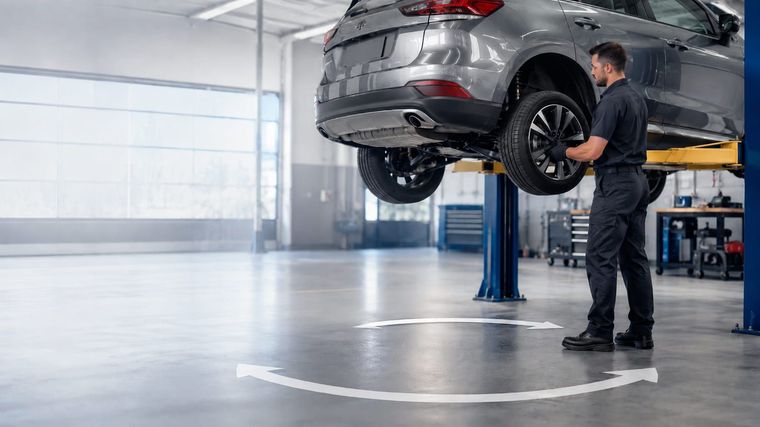
Regular tire rotation helps distribute wear more evenly between the front and rear of the vehicle. In general, it is best to follow the manufacturer’s recommended intervals or ask a professional for advice.
How to Prevent Uneven Tire Wear
To extend the life of your tires, adopt a few simple maintenance habits. Check tire pressure regularly, have the alignment inspected after a major impact, rotate your tires according to recommendations, and pay attention to unusual vibrations or noises.
It is also important to have the suspension and brakes inspected if you notice abnormal wear. The earlier the issue is detected, the easier it is to prevent additional damage.
When to Consult a Professional
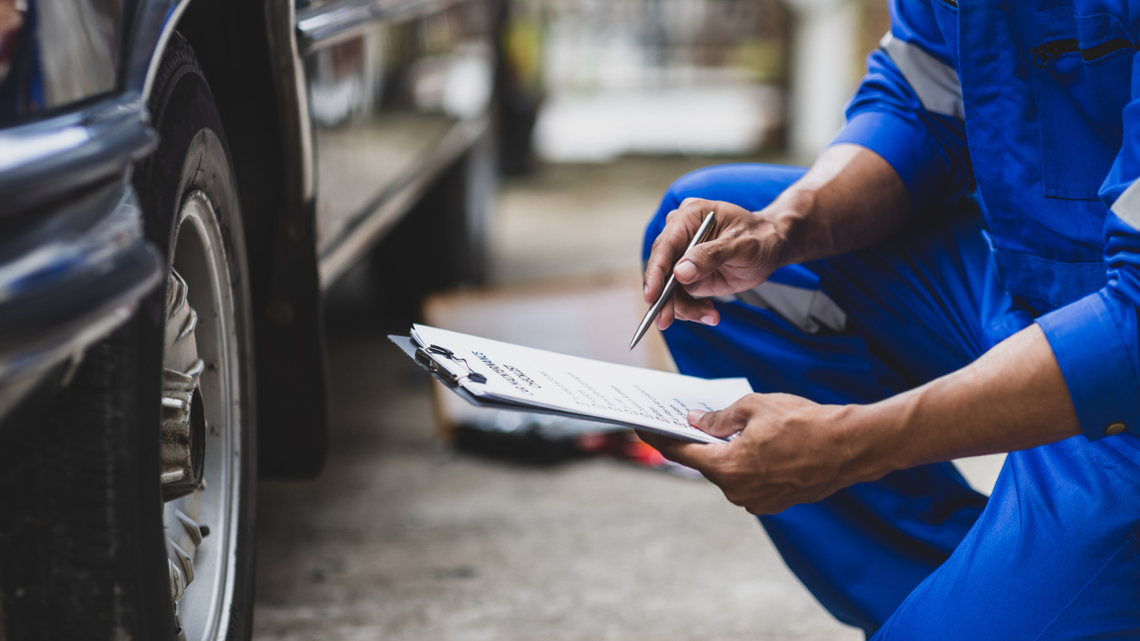
You should have your tires checked if you notice rapid wear, visible wear on only one side, vibrations at certain speeds, an off-center steering wheel, or a vehicle that pulls to the left or right. A specialist can identify the exact cause and recommend the necessary repairs.
Replacing tires without correcting the source of the problem can cause the same uneven wear to appear on your new tires. It is therefore best to fix the mechanical issue before installing a new set.
Conclusion
Uneven tire wear is a warning sign that should not be ignored. It can reveal poor alignment, incorrect tire pressure, a suspension problem, poor balancing, or driving habits that shorten tire life.
By regularly inspecting your tires and acting quickly at the first signs of abnormal wear, you can improve your vehicle’s safety, optimize its performance, and save on long-term maintenance costs. Your tires tell a story: knowing how to read their wear patterns can help keep your vehicle in better condition for longer.