
Your four tires never wear the same way. Even if you drive the same vehicle, on the same roads, with the same driving habits, your front and rear tires face different stresses every single trip. Tire rotation corrects that imbalance before it turns into a costly problem. It's one of the simplest, cheapest maintenance tasks you can do — and yet it's usually the first one people forget.
This guide explains why tires wear unevenly, what it actually costs you to skip rotation, how often to do it, and how Canadian winters change the equation.
Why Do Tires Wear Unevenly?
Uneven wear isn't a manufacturing flaw. It's a direct result of how your vehicle is built and driven.
Drivetrain and steering. On a front-wheel-drive vehicle — the most common setup in Canada — the front wheels handle steering and carry most of the engine's weight. They wear faster than the rear wheels, which simply follow along. On rear-wheel-drive vehicles, it's the opposite: the rear wheels do the propelling and wear down quicker.
Vehicle weight distribution. Most vehicles have the engine up front, shifting the center of gravity forward. That means front tires carry more weight, do more braking, and take on more cornering force, all of which accelerates wear.
Steering angle. Every turn puts different torsional stress on the front tires than on the rears, which follow a more direct path.
Minor misalignment. Even a well-maintained vehicle rarely has perfect alignment. Small deviations create specific wear patterns — feathering, one-sided tread wear — that get worse over time if left unaddressed.
Without rotation, this uneven wear compounds until some tires are dangerously thin while others still look nearly new.
The Real Risks of Skipping Tire Rotation
Skipping rotation isn't just about spending more money — it's a safety issue.
Reduced traction and hydroplaning risk. Front tires worn more than rear tires (or vice versa) create a traction imbalance. On wet roads, this significantly raises hydroplaning risk, especially if the more-worn axle loses grip first.
Longer stopping distances. Unevenly worn tires don't brake predictably. In an emergency, that unpredictability can be the difference between avoiding a collision and not.
Accelerated wear and premature replacement. A poorly maintained tire set typically wears 20-30% faster than one that's had regular rotations. In practical terms, that means replacing your tires a season or two earlier than necessary.
Vibration and ride discomfort. Uneven wear often shows up as steering wheel or body vibration — a sign the tread is no longer uniform.
Added strain on other components. Poorly worn tires force the suspension and steering system to compensate, which can accelerate wear on parts that are far more expensive to replace than a set of tires.
In Canadian winters, these risks compound. Traction that's already compromised on snow or ice becomes noticeably more dangerous when tire wear isn't even across all four corners.
How Often Should You Rotate Your Tires?
The general recommendation is straightforward: every 8,000 to 12,000 km, or roughly every six months. In practice, most shops suggest tying it to your oil change, which makes the schedule easy to remember.
A few factors can push you toward more frequent rotation:
Frequent highway driving at high speed
All-wheel-drive (AWD) or four-wheel-drive vehicles
A more aggressive driving style (frequent acceleration and braking)
Regularly carrying heavy loads
Your vehicle's manufacturer usually specifies a recommended interval in the owner's manual. That number accounts for your specific model's weight distribution and drivetrain — it's more reliable than any general rule of thumb.
Rotation Patterns by Vehicle Type
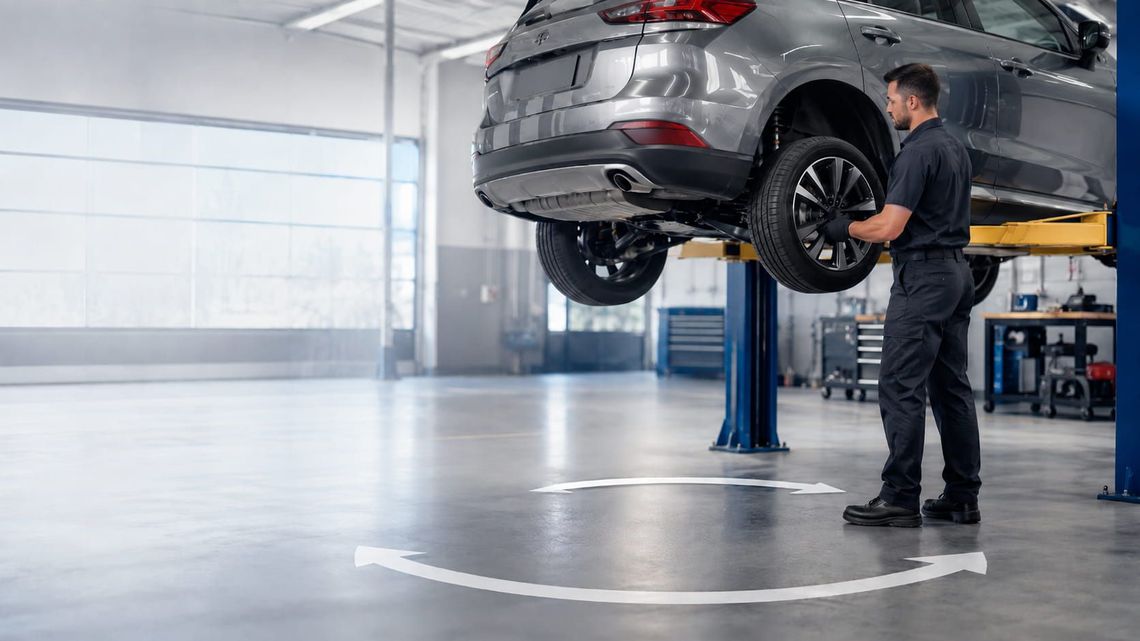
There's no single universal rotation pattern. The right one depends on three factors: your drivetrain, whether your tires are directional, and whether front and rear tires are the same size.
Rearward cross pattern: commonly used for front-wheel-drive vehicles with non-directional tires. Rear tires move diagonally to the front.
Forward cross pattern: suited to rear-wheel-drive or all-wheel-drive vehicles.
Front-to-back (straight rotation): used when tires are directional — they can only rotate one way, so crossing isn't possible, only a same-side front-to-back swap.
Side-to-side pattern: needed when front and rear tires are different sizes, as on many wide-stance sports vehicles. In this case, rotation is often limited to front-only or rear-only swaps.
For AWD vehicles — extremely common across Canada — regular rotation matters even more. Even a small difference in tire diameter can force the AWD system to constantly compensate, prematurely wearing out the drivetrain. It's a detail many drivers overlook, and the resulting repair bill dwarfs the cost of a rotation.
Tire Rotation and Manufacturer Warranty
This is something many drivers find out too late: most tire manufacturer warranties require proof of regular rotation to cover premature wear or manufacturing defects. Without a receipt or service record showing rotations at the recommended intervals, a warranty claim can be denied — even if the actual issue has nothing to do with maintenance.
Keep your rotation receipts no matter where you have the work done. If you bought your tires from a retailer that includes rotation in the purchase price — a common practice among several Canadian online tire retailers — make sure you stick to the suggested schedule so you don't void that protection.
DIY Rotation vs. Professional Service
Tire rotation is one of the most accessible maintenance jobs for anyone comfortable with basic tools. Here's what to know before attempting it yourself:
You can do it yourself if:
You have a reliable jack and jack stands (never rely on the jack alone)
You have a torque wrench to meet the manufacturer's specified torque
You know the correct rotation pattern for your vehicle
You can safely lift the vehicle, one side or corner at a time
A professional makes more sense if:
Your vehicle requires a Tire Pressure Monitoring System (TPMS) reset after rotation
You want to have alignment or balancing checked at the same time
You don't have the equipment to safely lift the vehicle
You want an official record on file for warranty purposes
Incorrect lug nut torque — too tight or too loose — is one of the most common mistakes in DIY rotation. Under-torquing can cause a wheel to come loose while driving; over-torquing can damage wheel studs or warp the brake rotor.
Signs You Need a Rotation (Or Waited Too Long)
A few signals are hard to miss:
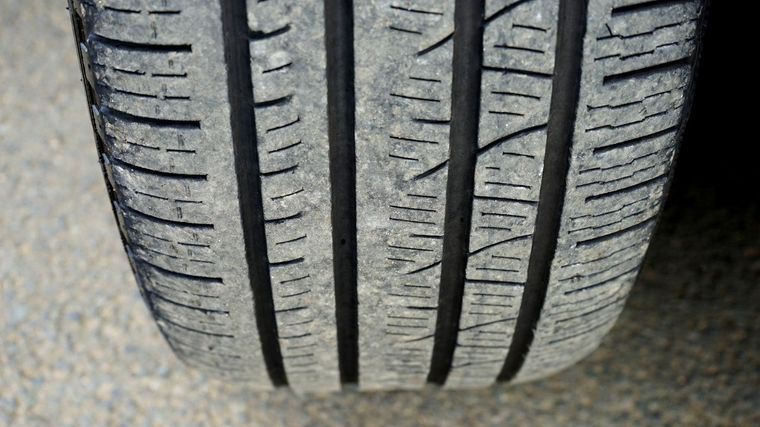
Visibly different wear between front and rear tires
Unusual rolling noise that changes with speed
Steering wheel vibration, especially at higher speeds
Tread that's thinner at the shoulders than in the center
If you notice these signs, a simple rotation might not be enough anymore — a tire already worn unevenly on one side may need replacement instead of relocation.
The Canadian Winter Factor
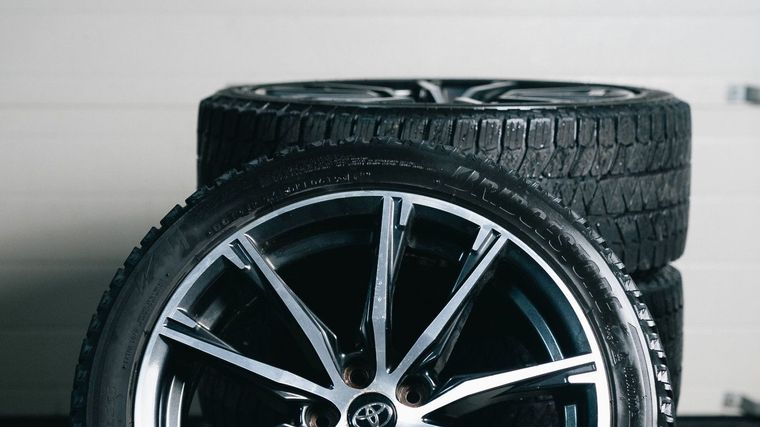
In Canada, rotation takes on extra importance because of seasonal tire changeovers. Every winter tire installation — and every switchover back to all-seasons or summer tires — is a natural opportunity to check wear and rotate at the same time, often with no added labor cost. It's also the ideal moment to inspect tread depth before a season where grip matters most.
The Bottom Line
Tire rotation costs little, takes about 30-45 minutes, and protects your safety, your wallet, and your warranty all at once. Skipping this simple task leads to accelerated wear, compromised traction, and in some cases, denied warranty claims. Whether you drive a front-wheel-drive, rear-wheel-drive, or all-wheel-drive vehicle, sticking to your manufacturer's recommended interval — generally 8,000 to 12,000 km — remains one of the most cost-effective maintenance habits you can build.
Next time you schedule an oil change or a seasonal tire swap, add rotation to the list. Your tires, your AWD system, and your warranty will thank you.